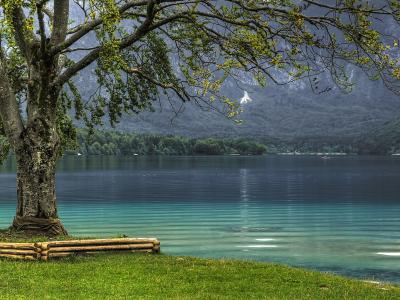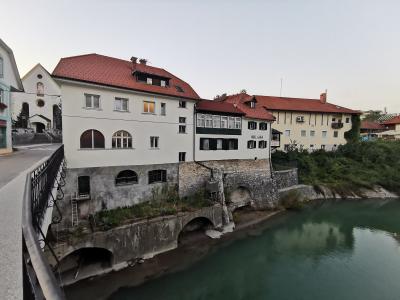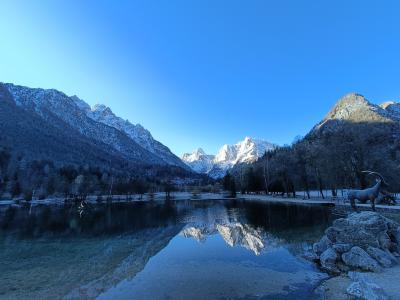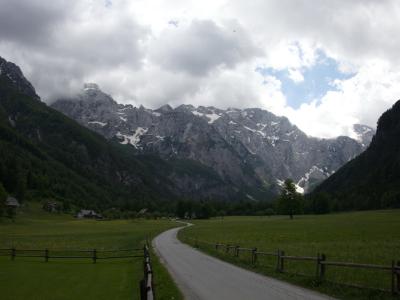
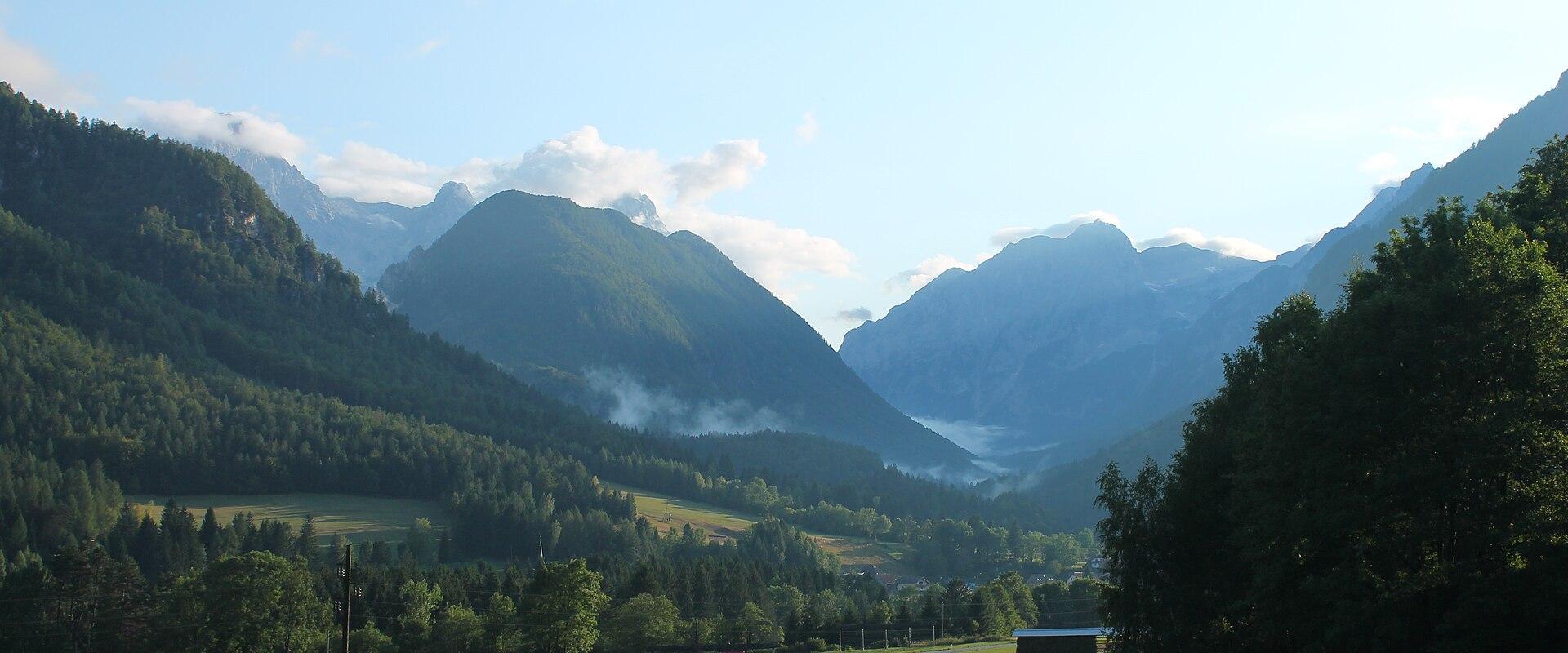
Dovje is a small village on a sunny terrace at around 700 metres above the Upper Sava Valley, on the southern slopes of the Karawanks, the range that forms the border with Austria. The village looks across the valley to the Julian Alps and, on clear days, to Triglav, Slovenia’s highest peak. Its history is closely tied to farming, mountaineering and the rhythms of rural life in the Upper Sava Valley, and the settlement still has the look of a traditional mountain village, with wooden balconies, flower-filled gardens and a peaceful churchyard.
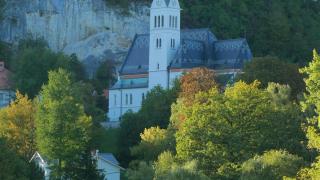
St. Michael’s Church is the village’s main landmark. Beside it lies the cemetery, and the village is the burial place of Jakob Aljaž, the priest of Dovje who bought the summit of Triglav in 1895 and placed the small metal tower that now crowns it, an act often described as an early gesture of protecting the mountain for Slovenes. The church and its churchyard make a calm stop, and a roadside monument near the main road recalls local history for those passing along the route between Mojstrana and Jesenice.
Traditional alpine architecture is a quiet attraction here. Farmhouses in Dovje often have the semi-circular doors typical of the Upper Sava Valley, and terraced fields climb the slope behind them. A historic blacksmith site shows the work that once supported a mountain community, with forge, tools and the craft of hammering iron by hand. A walk through the village, with a little time spent reading the details on the houses, is the best way to take it in.
Dovje is renowned as a base for outdoor activities. The village is minutes from Mojstrana, home to the Slovenian Alpine Museum and the starting point for three of the most beautiful alpine valleys in Slovenia: Vrata, Krma and Kot. These valleys lead deep into Triglav National Park, offering hiking, climbing and mountaineering routes for all abilities. Popular outings include the trail to Peričnik Waterfall, a cascade that can be seen from behind, and the ascent to the Aljaž Lodge in the Vrata Valley, a favourite stop for trekkers and climbers.
Cycling is another highlight, with marked routes connecting Dovje to Mojstrana, Kranjska Gora and the wider Julian Alps, including the long Sava cycling route. In winter the area becomes a snowy landscape, with cross-country skiing, snowshoeing and ski touring in the valleys and hills. The sunny aspect and sheltered position make the village a pleasant retreat all year.
The local cultural calendar includes haymaking, alpine festivals and folk music. Inns and guesthouses serve homemade dishes, regional wines and pastries, including Gorenjska specialities such as žlikrofi, buckwheat dishes and hearty soups.
Getting to Dovje is straightforward by car, with roads connecting the village to Mojstrana (about 2 km), Kranjska Gora and Jesenice. Public buses serve the area, and the village is compact and easily explored on foot or by bike. Parking is available near the church and main trailheads.
The best time to visit is June to September, when the weather is warm and ideal for hiking, cycling and exploring the alpine valleys. Spring and autumn offer mild temperatures, blooming meadows and fewer crowds, while winter is good for snow sports and quiet retreats.
With its mix of alpine adventure, sunny climate and traditional charm, Dovje offers a genuine taste of Slovenia’s mountains, away from the crowds.
Dovje’s calm pace, its views and its link with Triglav history make it a rewarding overnight stop for anyone heading toward the Vršič Pass or the high valleys, and the village is a less crowded alternative to the larger resorts in the valley.
Best time to visit
June to September offers warm weather for hiking, cycling, and mountain activities; spring and autumn are mild and scenic, winter is ideal for snow sports.
What to see in Dovje
Our picks first.
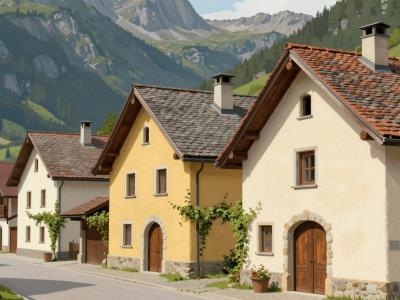
Historic Alpine architecture (including semi-circular doors on farmhouses)
Traditional Alpine farmhouses with semi-circular doors
Cultural Experiences · History & Heritage
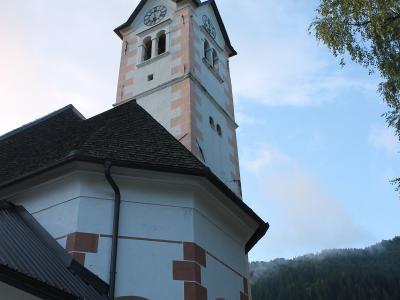
St. Michael's Church
14th-century church with Gothic and neo-Renaissance elements
Churches · Historic Towns
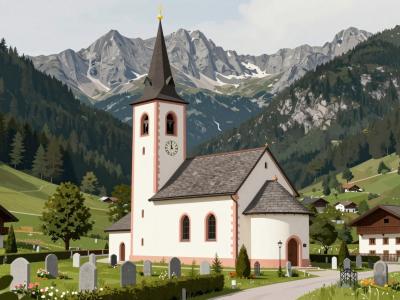
Cemetery near St. Michael's Church
Cemetery of Triglav mountaineers by St. Michael's Church
History & Heritage · Natural Wonders
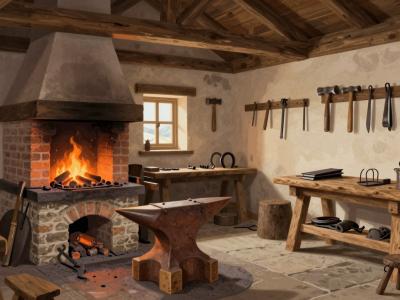
Historic Blacksmith Site
Historic blacksmith site showcasing traditional iron forging
History & Heritage · Traditional Crafts
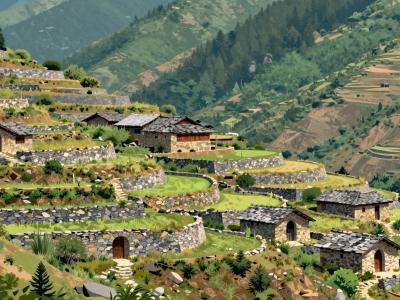
Terraced fields and semi-circular doors in historic Alpine architecture
Terraced fields and semi-circular doors in Alpine Dovje
Hiking Trails · Hills & Valleys
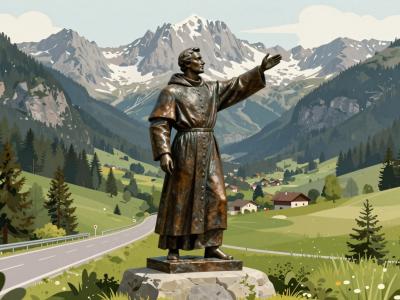
Monument near the main road
Monument honoring Jakob Aljaž by main road
Activities & Adventure · History & Heritage
Dovje by interest
The same sights, grouped by what you came for.
Did you know?
Checked facts about Dovje, each with its source.
-
History
Dovje Has Another Verifiable Detail
The village is close to Mojstrana and the Slovenian Alpine Museum, and serves as a starting point for exploring the Vrata, Krma, and Kot valleys leading into Triglav National Park.
Source: Krma - Wikipedia -
Sports
Dovje Has Another Verifiable Detail
With its peaceful atmosphere, access to hiking, cycling, and winter sports, and a welcoming community, Dovje is an ideal destination for families, nature lovers, and anyone seeking an authentic alpine experience in Slovenia.
Source: Dovje - Wikipedia
Planning a visit to Dovje
Itineraries that include Dovje
Good to know
- Currency
- EUR
- Language
- Slovene
Quick Facts
Book your stay