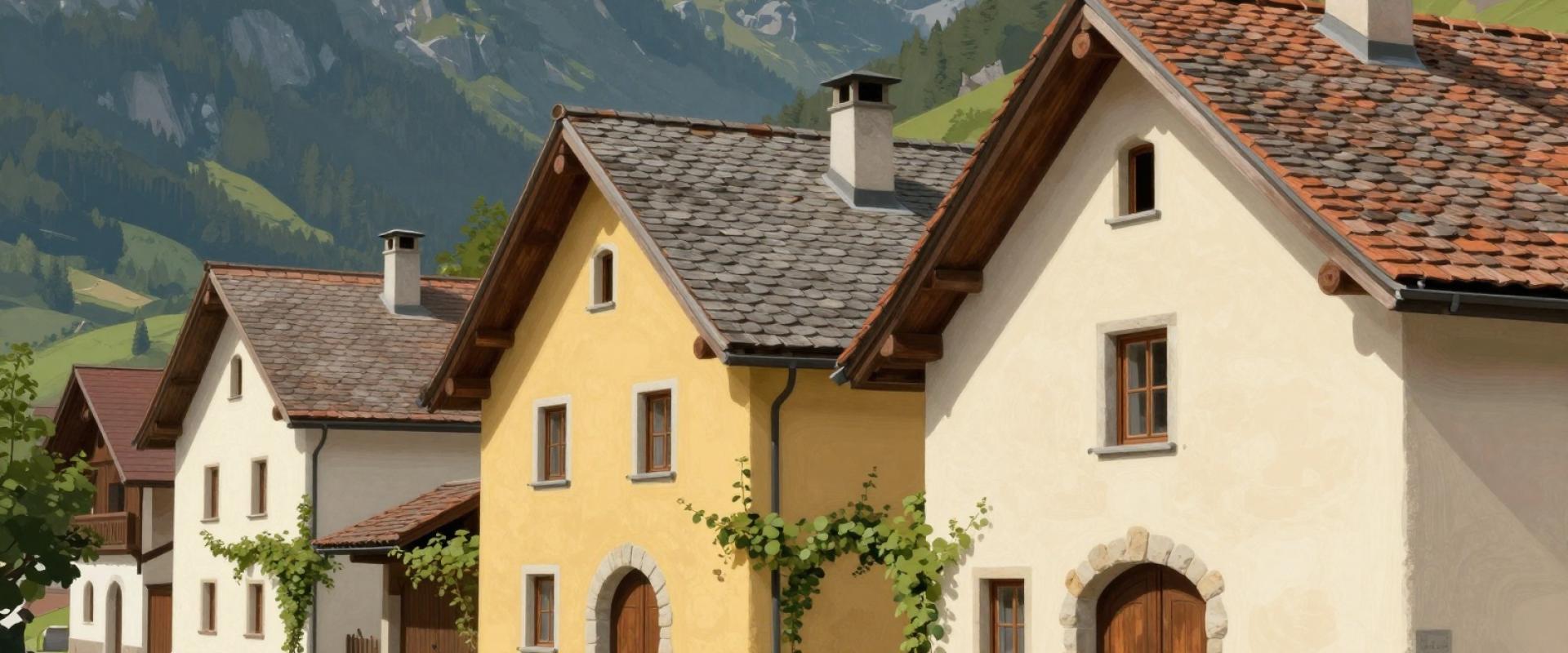
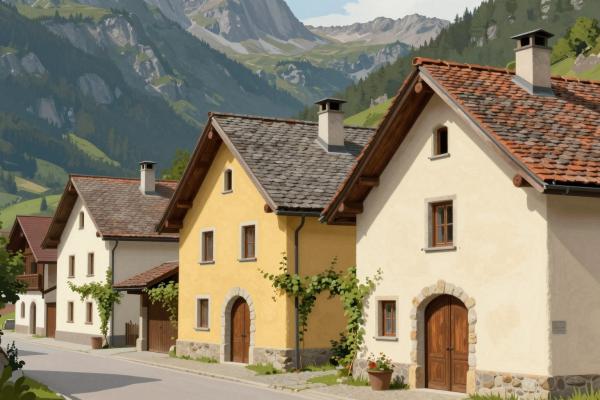
Historic Alpine architecture (including semi-circular doors on farmhouses)
Traditional Alpine farmhouses with semi-circular doors
- Where
- Dovje, Gorenjska
- Directions
- Directions
Dovje is a village in the Upper Sava Valley in northwestern Slovenia, at the foot of the Karavanke Mountains and just beside Mojstrana. It is a place where the old farming landscape of the Julian Alps region can still be read in the buildings: large farmhouses set among terraced fields, with steep roofs, timber balconies and thick masonry walls on the ground floor. The village is best enjoyed as a slow walk rather than a checklist of sights.
The detail that gives the village its character is the arched doorway. Some farmhouses in the valley have semicircular stone-framed doors, a feature that suggests older building traditions, and which stand in contrast to the plain rectangular openings seen on later buildings. These houses were built for working families, with space for animals, hay and tools under one roof, and the shape of the structure follows the demands of the climate: heavy snow in winter, short summers and long distances to markets. Not every house keeps its original details, but enough survive for the character of the settlement to come through.
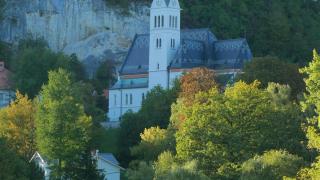
The church of St. Michael is the village landmark, with its cemetery beside it, and it is worth a visit for its setting under the mountains. Dovje has a link to one of Slovenia's best-known mountaineering stories: Jakob Aljaž, the priest who placed the small metal tower on the summit of Triglav, served as parish priest here and is buried in the village cemetery. Nearby there is also a historic blacksmith site, a reminder of the craft work that supported mountain farming, and a monument beside the main road. The terraced fields around the village, where hay was cut and crops grown on the steep slopes, are part of the same story.
A short drive up the valley, the Slovenian Alpine Museum in Mojstrana tells the history of mountaineering in the Julian Alps and Karavanke, and it is a natural companion to a walk through Dovje. The village also lies on the route to the Vrata Valley and the north face of Triglav, so it often appears in the itinerary of hikers heading into the high mountains.
The village suits walkers, cyclists, photographers and anyone curious about vernacular architecture. Early morning and late afternoon give the best light on the walls and the mountains. As the houses are private homes, visitors should look from the road and respect residents' privacy.
Categories
More photos coming soon
Nearby Attractions
Other places to visit in Dovje
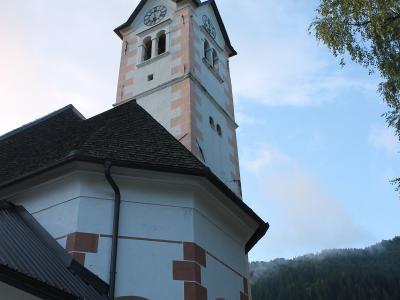
St. Michael's Church
14th-century church with Gothic and neo-Renaissance elements
Churches · Historic Towns
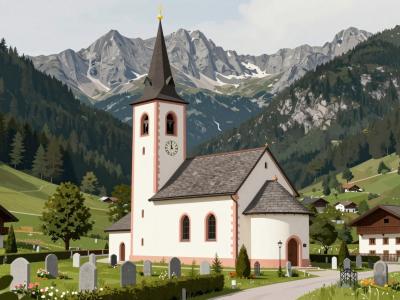
Cemetery near St. Michael's Church
Cemetery of Triglav mountaineers by St. Michael's Church
History & Heritage · Natural Wonders
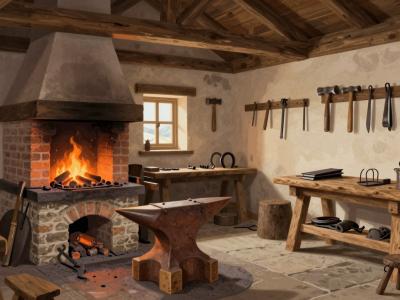
Historic Blacksmith Site
Historic blacksmith site showcasing traditional iron forging
History & Heritage · Traditional Crafts
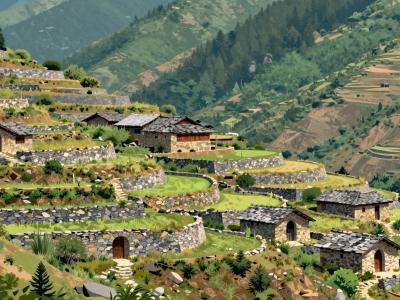
Terraced fields and semi-circular doors in historic Alpine architecture
Terraced fields and semi-circular doors in Alpine Dovje
Hiking Trails · Hills & Valleys
Questions people ask
Quick Facts
Best Time to Visit
June to September offers warm weather for hiking, cycling, and mountain activities; spring and autumn are mild and scenic, winter is ideal for snow sports.
Book your stay