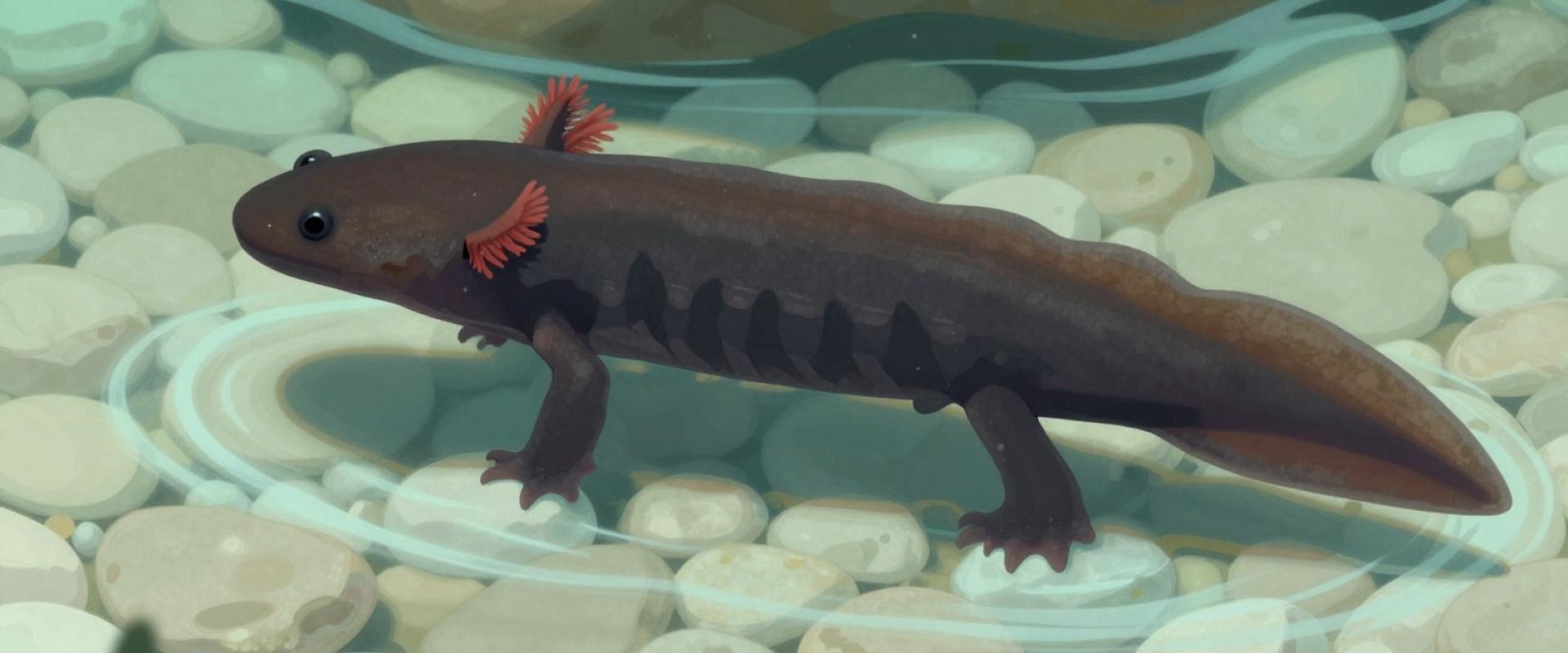
Proteus anguinus parkelj (Crni moceril)
Endemic cave salamander with black body and red gills
- Where
- Črnomelj, Bela krajina
- Directions
- Directions
The black olm, Proteus anguinus parkelj, in Slovene črni močeril, is a dark-skinned subspecies of the famous cave salamander and one of the rarest animals in Slovenia. It lives only in underground waters in the karst around Črnomelj, in Bela Krajina in the southeast of the country, and nowhere else in the world. The more familiar olm of the Dinaric karst, the animal of Postojna Cave, is pale pink and nearly colourless. The black form is distinguished by its dark body, and the creature is related to the white olm but has been isolated in its own small territory long enough to have developed its own character.
The discovery is recent. The black olm became known to science in the late twentieth century, when specimens were found in the Dobličica spring near Črnomelj in the 1980s, and it was described as a distinct subspecies in the 1990s. The local name parkelj is the Slovene word for a devil or imp, the creature that accompanies Saint Nicholas in winter folk traditions, which suits an animal that lives in darkness and shows a sinister colouring. Scientists were surprised to find a distinct dark form of the species in such a small area, and its existence is a reminder of how much remains to be learned about life underground.
Like the white olm, the black olm spends its whole life in water. It has an eel-like body, tiny legs, feathery external gills and a long, flattened tail, and it feeds on small crustaceans, snails and other tiny creatures it detects by smell and by sensitivity to vibration. It lives for many decades, reproduces slowly and can survive for a long time without food, which makes it vulnerable to any change in its habitat. Its range is tiny, covering only a few square kilometres of shallow karst, so pollution of groundwater, changes to springs or drought could have serious consequences, and the animal is strictly protected.
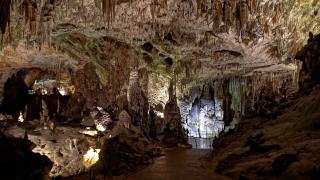
Because the olm lives out of sight, it is rarely seen in the wild, and visitors cannot go looking for it. Interpretive displays in the Črnomelj area explain its biology and the need to protect karst waters, and an information point near one of the springs offers a way to learn more. Related natural sights include the Djud Cave, the Nerajski and Lahinjski Lug marshes, and the Sodevska Stena viewpoint.
The subject suits families, nature enthusiasts and anyone curious about unusual wildlife. Check ahead for the opening hours of any visitor centre, and treat the springs and caves with care, as the black olm depends on clean water.
Categories
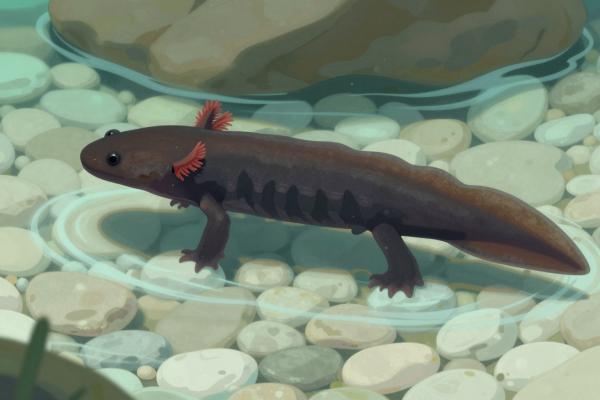
More photos coming soon
Nearby Attractions
Other places to visit in Črnomelj
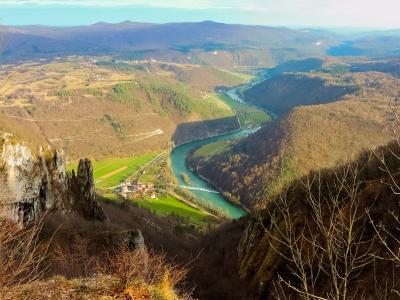
Sodevska Stena Viewpoint
Karst viewpoint over Poljanska Valley and Kolpa River
Natural Wonders · Hiking Trails
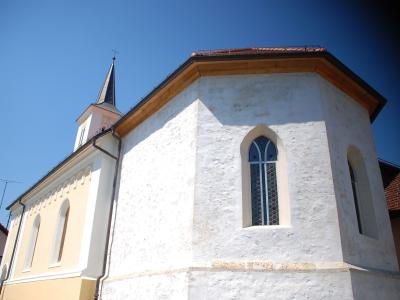
Church of the Holy Spirit
15th-century church turned cultural venue in Črnomelj
Churches · Museums
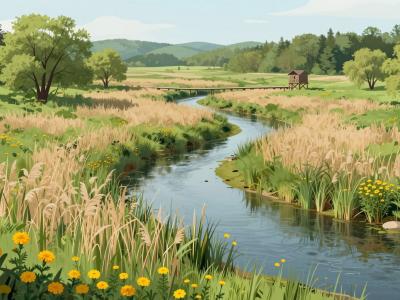
Nerajski and Lahinjski Lug Marshes
Biodiverse karst marshes shaped by Lahinja River
Natural Wonders · Guided Tours
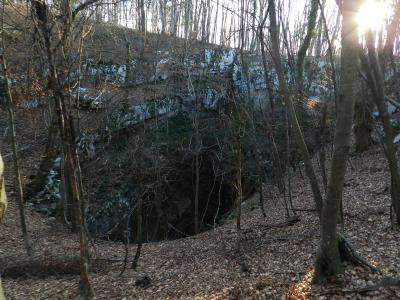
Djud Cave
Karst cave with rich speleological formations
Caves · Geological Sites
Questions people ask
Quick Facts
Best Time to Visit
May to September offers warm, pleasant weather for outdoor activities, river adventures, and festivals; spring and early autumn are quieter and mild.
Book your stay