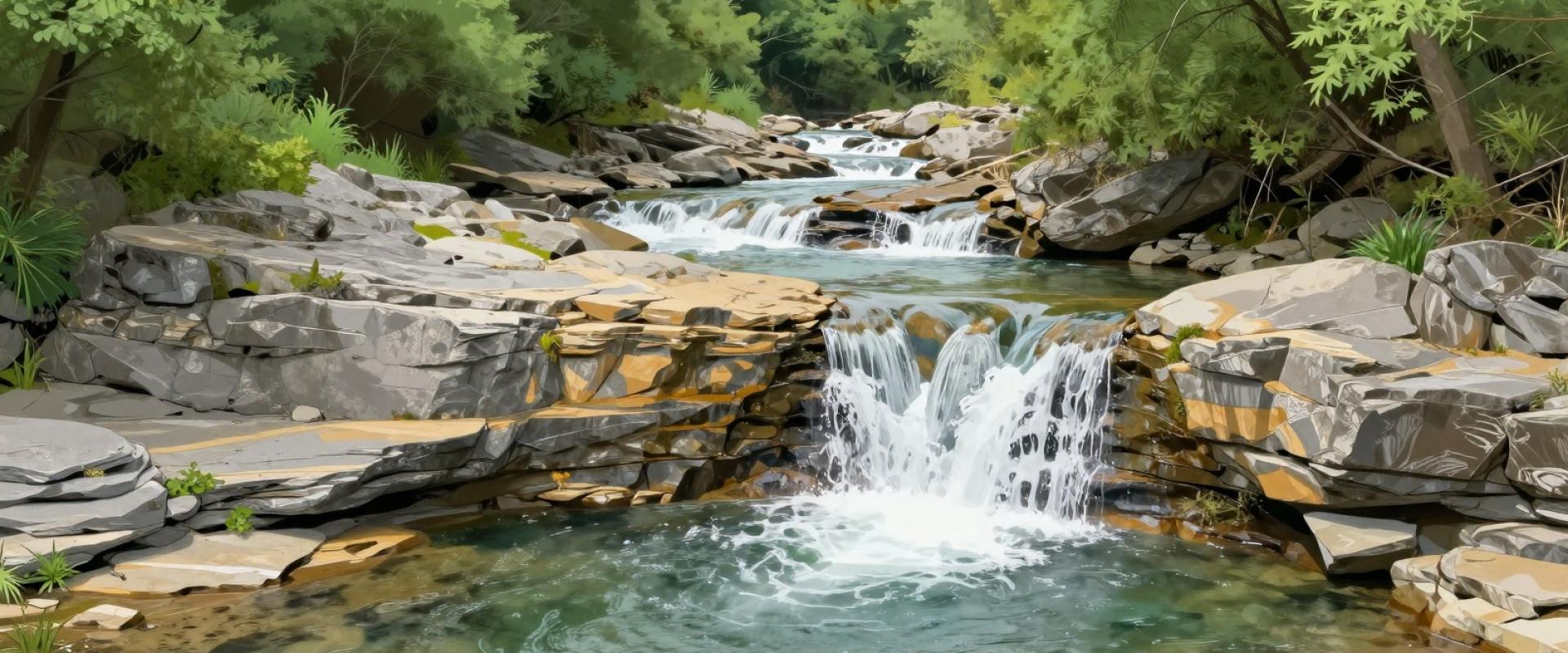
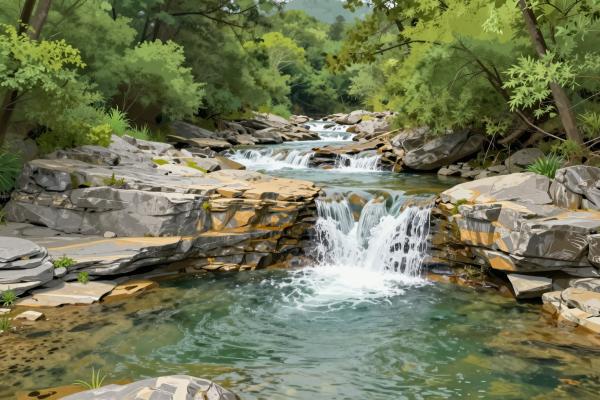
Flysch layers, pools, and waterfalls (at confluence with Rokava River)
Flysch rock layers with pools and waterfalls at Rokava Ri...
- Where
- Dragonja, Piran & Istrian Coast
- Directions
- Directions
The southwestern corner of Slovenia is built on flysch, a type of rock that is rarely seen in the Alps but very common around the northern Adriatic, and the place where the Dragonja and the Rokava meet is one of the places where it is most visible. Flysch forms when sediment is carried by underwater avalanches into a deep sea basin and settles in layers. Each avalanche leaves a bed of sandstone, and in the quiet periods between them fine mud settles and turns to marl or shale. Repeated over millions of years, the process builds a stack of alternating hard and soft layers, and when the sea floor is later raised and folded, the stack is tilted and exposed. The Istrian flysch dates from roughly fifty million years ago, in the Eocene, and it forms the grey and ochre hills that run along the coast.
At the confluence, the rivers have cut into this stack and revealed the layers in the riverbanks as neat horizontal or slightly tilted stripes. Because the sandstone resists erosion and the marl does not, the water has worn the soft layers away faster, leaving hard ledges that stick out like steps. The result is a series of small waterfalls and shallow pools, where the water tumbles over a ledge and gathers in a basin below, then runs on to the next. The scale is modest, and the water level changes a great deal through the year, with strong flow after rain and very little in a dry summer, but the effect is attractive and the layered rock makes it more interesting than an ordinary stream. For geology students and anyone who enjoys reading a landscape, it is an instructive place.
The setting is typical of the Dragonja Valley. Olive terraces, wildflower meadows and stands of oak and hornbeam rise above the water, and narrow paths lead down from nearby villages. The easiest way to explore is on foot, and the area can also be visited by bike on the tracks of the valley. Wear shoes with grip, because the wet flysch is slippery, and take care near the edges. Do not climb on the layered banks, because they are friable and can crumble.
This stretch of river is linked with the other attractions of the Dragonja valley. The Dragonja River as a whole is covered in its own listing, the Walking paths from nearby villages give the routes in, and the Historical remnants of Mazurinov Mill recall the valley's farming past. Korenika & Moskon Winery, Gold Istra and Tonina House are other places to stop for local produce.
Spring and autumn are the best seasons, when the water is flowing and the temperature is mild. The Mediterranean light on the striped banks is lovely, and Slovenian Istria offers few quieter places to read the rocks.
Categories
More photos coming soon
Nearby Attractions
Other places to visit in Dragonja
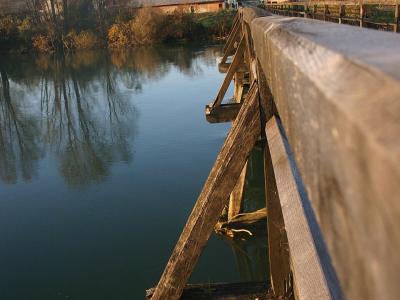
Dragonja River
Border river flowing through Slovenia's Mediterranean valley
Natural Wonders · Cycling Routes
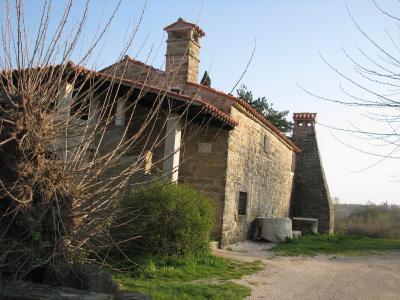
Tonina House
Traditional Istrian stone house by Dragonja River
Guided Tours · Hills & Valleys
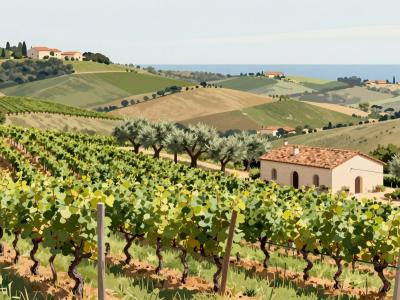
Korenika & Moskon Winery
Biodynamic winery in Slovenian Istria vineyards
Cultural Experiences · Food & Gastronomy
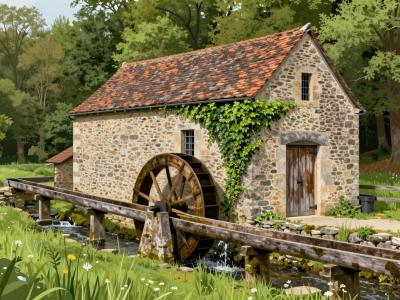
Historical remnants of Mazurinov Mill
Ruins of 19th-century Mazurinov Mill by Dragonja River
History & Heritage · Hiking Trails
Questions people ask
Quick Facts
Best Time to Visit
May to September offers warm, sunny weather, blooming landscapes, and ideal conditions for hiking, swimming, and exploring Dragonja’s river valley and surroundings.
Book your stay