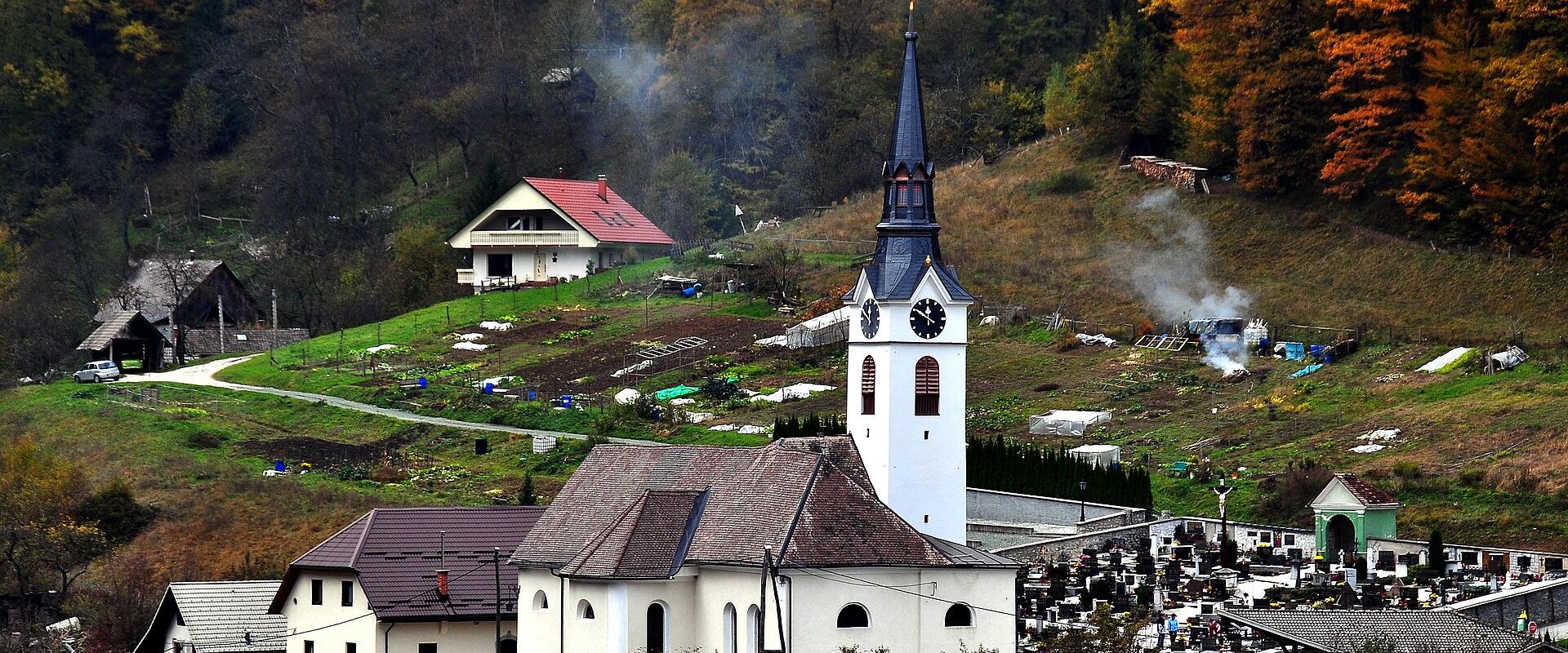
Kropa lies in the green Lipnica Valley in the Gorenjska region, one of Slovenia’s most historically important and visually striking villages. Its origins go back to at least the fourteenth century, when abundant local iron ore and the power of the Lipnica stream helped a thriving iron-forging industry to develop. Over the centuries Kropa became known as the centre of Slovenian blacksmithing, producing everything from nails and tools to ornate wrought-iron work that decorated churches, homes and public spaces across the country. The village’s industrial legacy is still visible in its architecture, museums and living traditions.
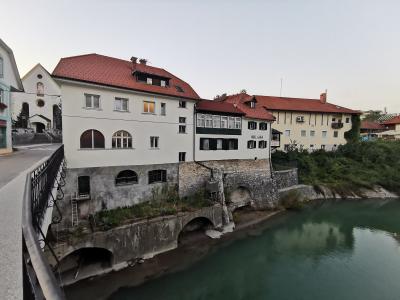
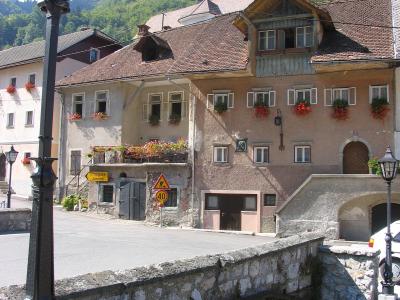
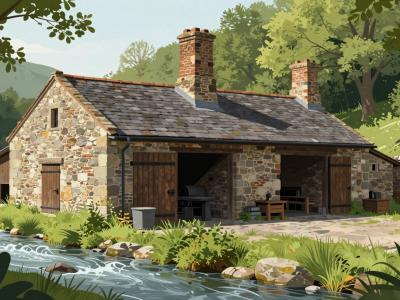
The centrepiece of Kropa is its well-preserved old town, where narrow cobbled streets wind between historic houses, many with intricate ironwork on doors, windows and balconies. The town’s most important cultural institution is the Iron Forging Museum (Kovaški muzej), housed in a former foundry. Visitors can explore interactive exhibits on the history of ironworking, see traditional tools and products and even watch live blacksmithing demonstrations. Another highlight is the Fovšaritnica Museum House, which gives a glimpse of the daily life of Kropa’s blacksmiths and their families, and the Vigenjc Vice Nail Forge shows how nails, the village’s most famous product, were once forged by hand in a small workshop driven by water power. The Mozaic Exhibition Gallery adds an art element, with works that use mosaic techniques.
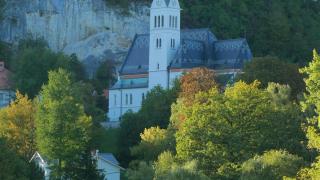
Kropa’s spiritual and architectural heritage is equally strong. The Church of St. Leonard, with its Baroque interior and wrought-iron details, reflects the village’s artistic and religious traditions. Throughout the village there are many examples of public and private ironwork, from ornate fences and lamp posts to decorative signs and crosses, each telling a story of local craftsmanship. The sheer density of metalwork makes a slow walk through the lanes an education in itself.
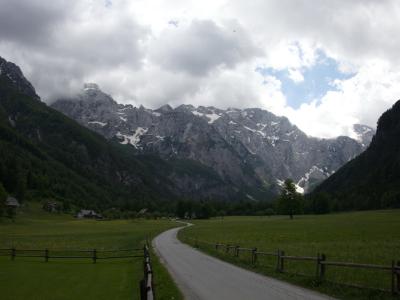
Beyond its historical sights, Kropa is a gateway to outdoor adventure. The surrounding hills and forests are crossed by hiking trails, including the scenic route to the Vodiška planina mountain pasture and the Partisanski dom mountain hut, both with wide views of the valley and the Julian Alps. The Lipnica stream, once the lifeblood of Kropa’s forges, now provides a calm setting for riverside walks and relaxation. For those who want something more active, the area offers kayaking, canoeing and river tubing in the warmer months.
Kropa’s calendar is enlivened by traditional events and festivals that celebrate its blacksmithing heritage, where visitors can see live forging demonstrations, taste local food and enjoy folk music and dance. The village is also a base for the wider Gorenjska region, with the medieval town of Radovljica, the well-known Lake Bled and the hiking trails of the Julian Alps all within easy reach.
Getting to Kropa is straightforward. The village is about 10 kilometres from Radovljica and can be reached by car on well-kept local roads. Public transport includes regional buses from Radovljica and other nearby towns. Parking is available at the entrance to the village, since the old town is best explored on foot. Accommodation ranges from guesthouses and private rooms to small hotels, many with a warm welcome and a taste of local hospitality.
Plan at least half a day. A good order is the Iron Forging Museum first, for the overview, then the Vigenjc Vice Nail Forge and the Fovšaritnica for the human side of the story, followed by a slow walk through the lanes to look at the ironwork on gates and balconies. Afterwards a short walk along the Lipnica stream or a longer climb toward the pasture gives a contrast with the museum interiors, and a coffee in the village rounds off the visit before the drive back to Radovljica or Bled.
The best time to visit is late spring to early autumn, when the weather is mild and the surrounding countryside is at its most vibrant. May, June and September offer pleasant temperatures and fewer crowds, while summer brings lively festivals and outdoor activities. Winter visits are also rewarding, with snow on the hills providing a picturesque backdrop and the village’s cosy atmosphere inviting a slow visit. Whatever the season, Kropa’s mix of history, craftsmanship and natural beauty makes for a memorable visit, and it pairs well with a morning in Radovljica.
Best time to visit
May to June and September to October offer mild weather, vibrant scenery, and ideal conditions for exploring Kropa’s history and hiking trails.
What to see in Kropa
Our picks first.
Kropa by interest
The same sights, grouped by what you came for.
Did you know?
Checked facts about Kropa, each with its source.
-
Sports
Kropa Has Another Verifiable Detail
Kropa’s rich industrial heritage is complemented by its natural beauty, with hiking trails leading into the surrounding hills and mountain pastures.
Source: Kropa - Wikipedia
Planning a visit to Kropa
Itineraries that include Kropa
Good to know
- Currency
- EUR
- Language
- Slovene
Quick Facts
Book your stay