
Strunjan's salt-making village
Historic salt pans crafting fleur de sel since 804
- Where
- Strunjan, Piran & Istrian Coast
- Directions
- Directions
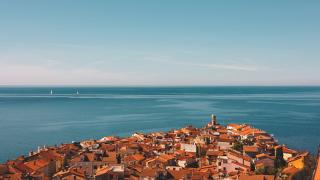
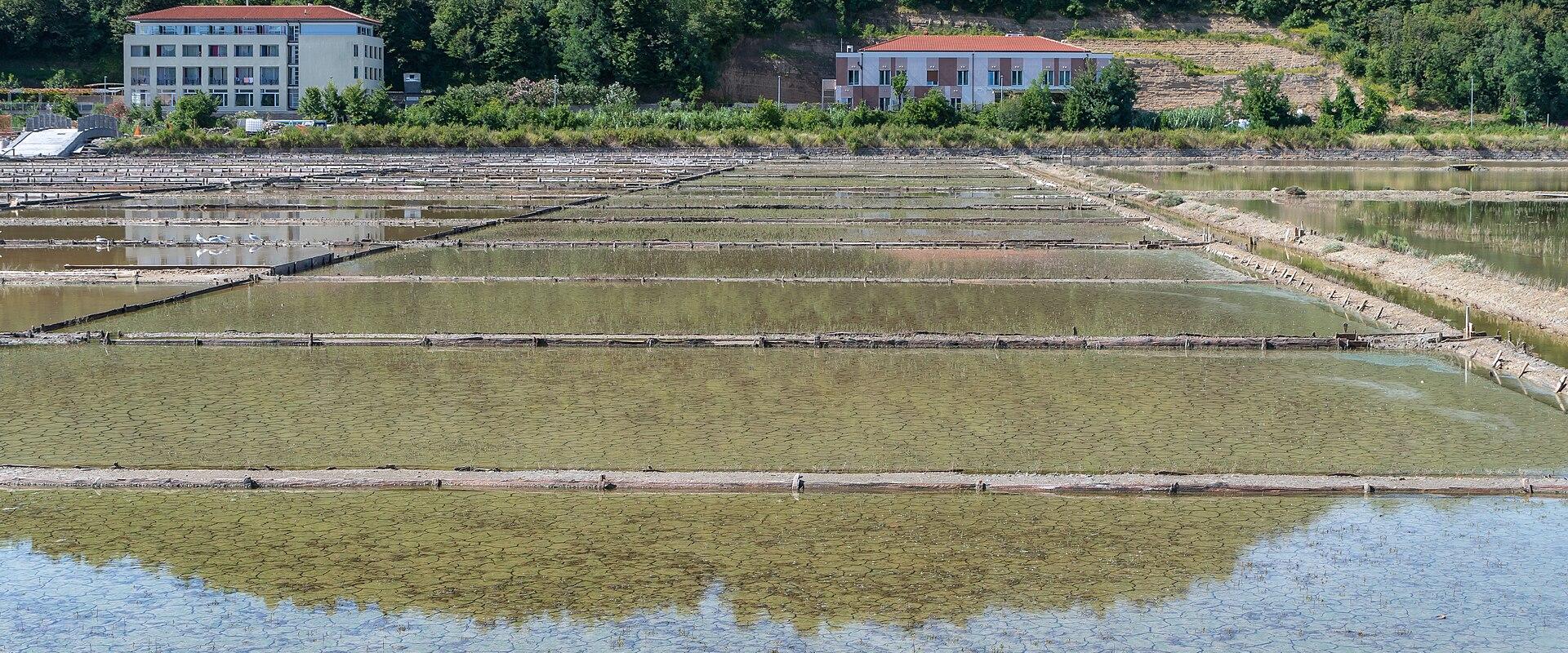
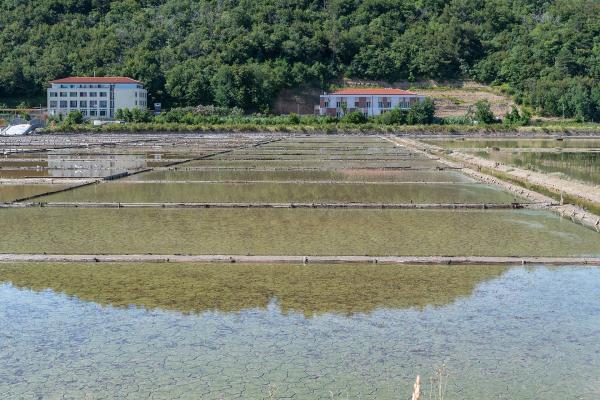
Salt has been made on the northern Adriatic coast for many centuries, and Strunjan is one of the places where the tradition still survives. The salt pans lie in a small, sheltered bay on the coast between Piran and Izola, within the protected landscape of the Strunjan Nature Park, and they are a living remnant of an economy that once shaped the whole coast. Salt was a valuable commodity in medieval and early modern Europe, used to preserve fish and meat, and the towns of Piran and Koper, which belonged to Venice for centuries, grew rich on it. The much larger pans at nearby Sečovlje are better known, but Strunjan's small pans have their own character and a quieter atmosphere.
Salt is made here in the traditional manner. Sea water is let into shallow basins, called pans, where sun and wind evaporate the water over the warm months. As the brine becomes concentrated, salt crystals form. The finest crystals, which form as a delicate layer on the surface in calm, sunny weather, are skimmed off by hand as fleur de sel, a prized salt used by chefs. The coarser salt is raked from the bottom of the pans. The work depends on the weather, and it is still done in much the same way as in earlier centuries, using wooden tools, though the scale is small.
The landscape around the pans is a rare habitat. The mix of salt water, mud and shallow lagoons supports specialised plants such as glasswort, and many birds, including waders and herons, use the area for feeding and resting during migration. For this reason, the area is protected, and visitors are asked to stay on the paths. A walk along the shore is easy and pleasant, particularly in spring and autumn when the light is soft and the crowds are thin, and the cliffs of Strunjan rise behind the pans, giving a dramatic backdrop.
The village of Strunjan itself is small, with Mediterranean stone houses, gardens and a few restaurants and inns serving fish and local wine. Nearby, the Strunjan beaches and Mesečev Zaliv, or Moon Bay, offer swimming, while Talaso Strunjan provides wellness treatments based on sea water and salt. The Strunjan Cliff is a short walk along the coast, and the paths link easily to Piran. The pans are best seen in the warm season, when salt-making is under way.
Categories
More photos coming soon
Nearby Attractions
Other places to visit in Strunjan
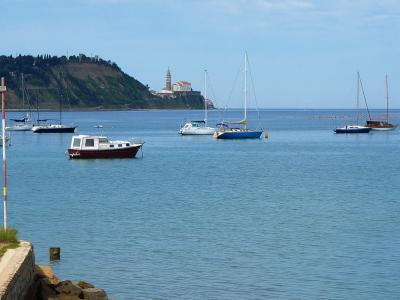
Nature Park Strunjan
Coastal cliffs and saltpans shaped by the sea
Activities & Adventure · Coastal & Maritime
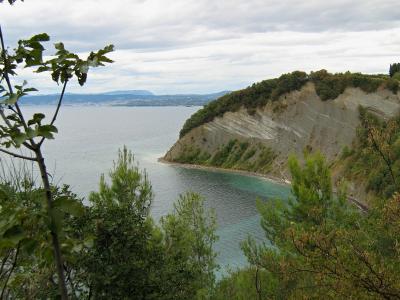
Strunjan Nature Park
Coastal cliffs, lagoon, and historic saltpans
Coastal & Maritime · Natural Wonders
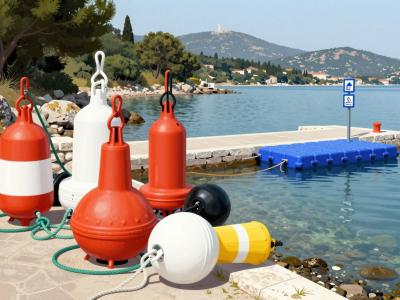
Strunjan beaches
Coastal nature reserve with therapeutic mud baths
Beaches · Hiking Trails
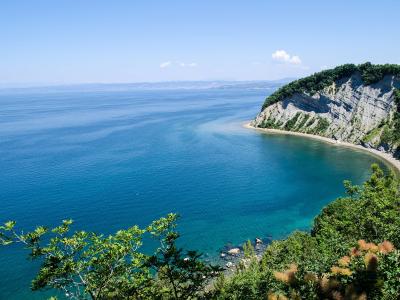
Strunjan Cliff
Cliffside views and saltpan heritage park
Coastal & Maritime · Natural Wonders
Questions people ask
Quick Facts
Best Time to Visit
May to October is ideal, with warm, sunny weather; autumn offers comfortable temperatures and fewer crowds for outdoor activities and beach visits.
Book your stay