- Where
- Triglav, Ljubljana & Central Slovenia
- Directions
- Directions
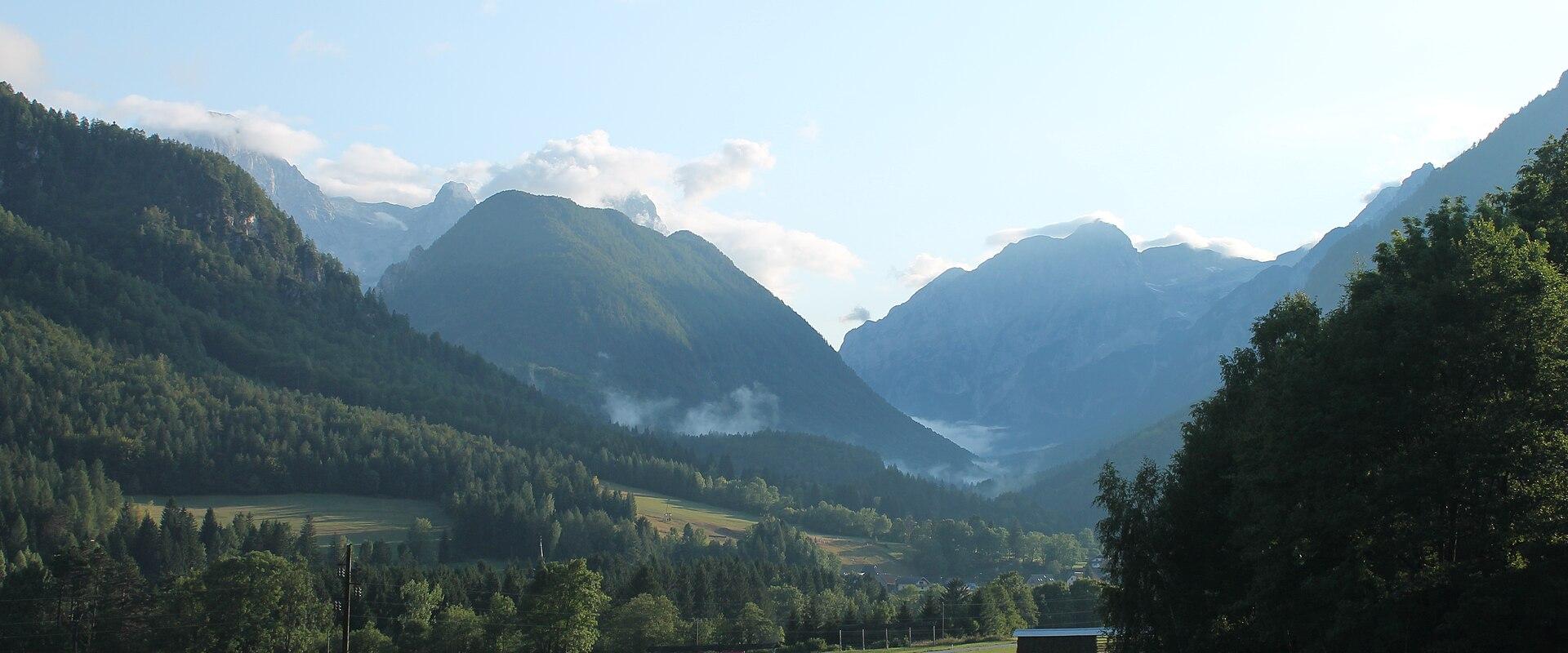
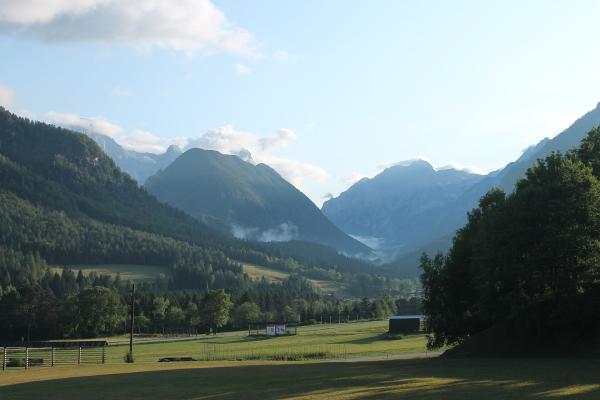
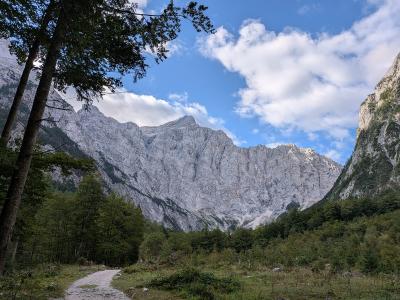
The Julian Alps are the highest and most dramatic mountains in Slovenia, a limestone range in the northwest of the country that extends across the border into Italy. The name is usually traced back to Julius Caesar and the Roman town of Forum Iulii, now Cividale, and the range has been known by it since antiquity. On the Slovenian side the range is dominated by Triglav, at 2,864 metres the highest peak in the country, and most of it lies inside Triglav National Park, the only national park in Slovenia.
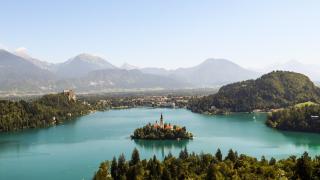
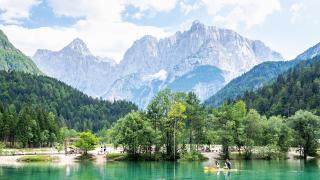
The park covers around 84,000 hectares and was set up in the early 1980s, building on a protected area created decades earlier, and it is part of a wider biosphere reserve recognised by UNESCO. The landscape is varied: high limestone walls and bare plateaus, deep glacial valleys, forests, alpine meadows, turquoise rivers and lakes. The Soča River, famous for its emerald colour, rises on the southern side, while lakes Bled and Bohinj lie in the valleys on the eastern side. The Vršič Pass, crossed by a road with many hairpin bends built by Russian prisoners of war during the First World War, links Kranjska Gora in the north with the Soča valley, and the little Russian Chapel beside it is a moving memorial.
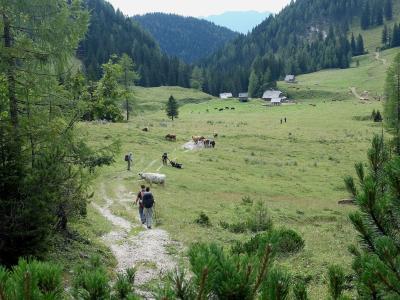
The range is a playground for walkers, climbers and cyclists in summer and for skiers in winter, and there are routes for every level. Gentle valley walks, such as those in Vrata, Bohinj and Trenta, lead to waterfalls and alpine pastures, while the Triglav Lakes Valley, with its string of small lakes, is one of the best-loved mountain walks. For experienced climbers there are via ferrata routes, rock climbs and the ascent of Triglav itself. In winter, ski areas such as Kranjska Gora, Vogel and Kanin offer downhill and cross-country skiing, and ski touring is popular in the high country. Mountain huts provide food and shelter across the range.
The mountains are also a place of legend and history. Tales of Zlatorog, the white chamois with golden horns, are told around Bohinj and the Soča valley. The explorer and writer Julius Kugy, who loved the range and wrote about it, is remembered with a monument in Trenta, and during the First World War the Isonzo front ran through the southwestern part of the range, leaving trenches, forts and memorials that can still be visited. The park's wildlife includes chamois, ibex, marmots, golden eagles and a large number of alpine plants, some found nowhere else.
Information centres in towns such as Bled, Bohinj, Trenta, Mojstrana and Kobarid help with planning. There is no entrance fee for the park, but visitors are asked to follow conservation rules, stay on marked paths, and check weather and trail conditions, since conditions change quickly at altitude. The range suits everyone from casual walkers to serious mountaineers, and each season brings a different character, with wildflowers in spring, green pastures in summer, colour in autumn and snow in winter.
More photos coming soon
Nearby Attractions
Other places to visit in Triglav
Questions people ask
Quick Facts
Best Time to Visit
Late June to mid-September offers the best weather for hiking, climbing, and exploring Triglav National Park; spring and autumn are quieter but less predictable.
Book your stay