- Where
- Ribčev Laz, Bled & Bohinj
- Directions
- Directions
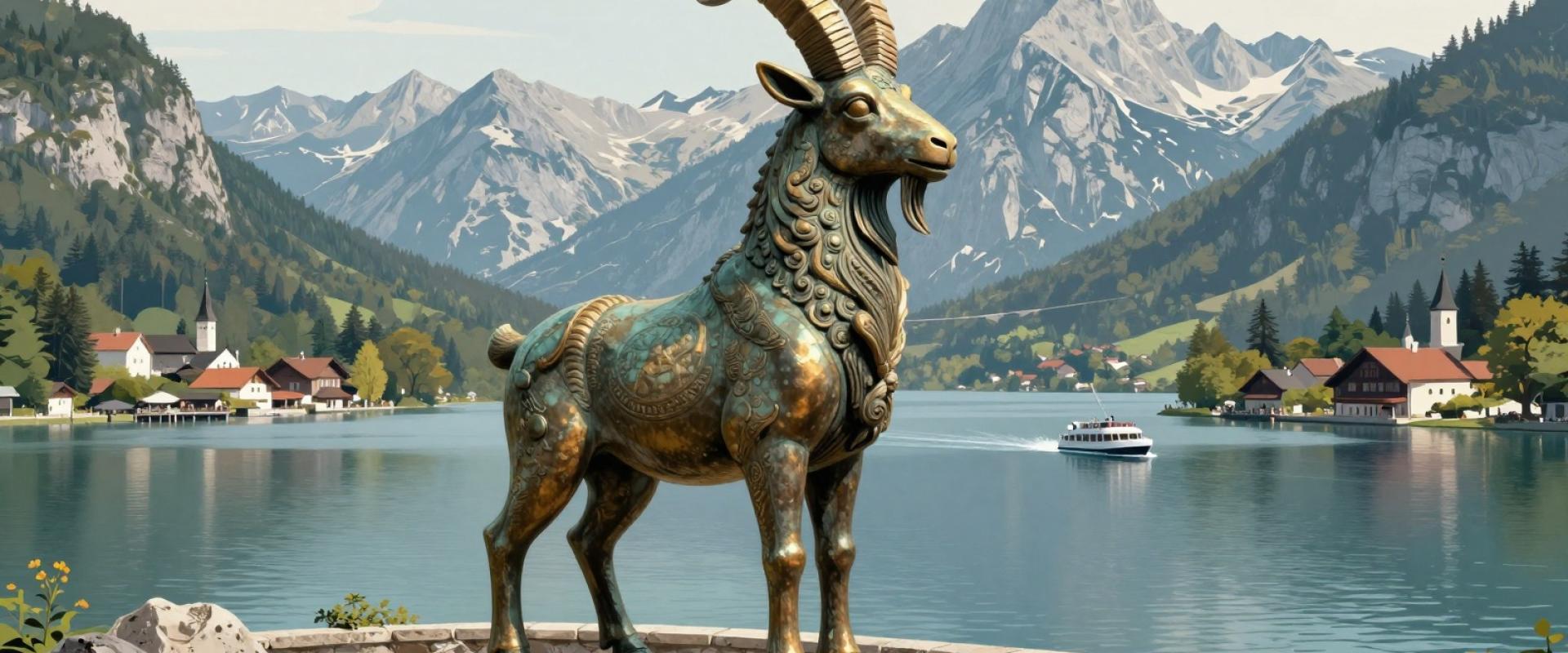
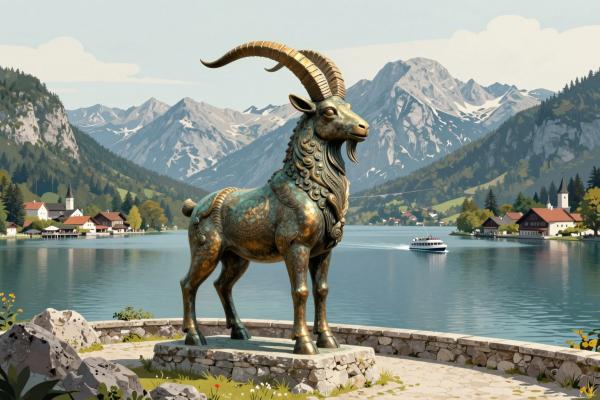
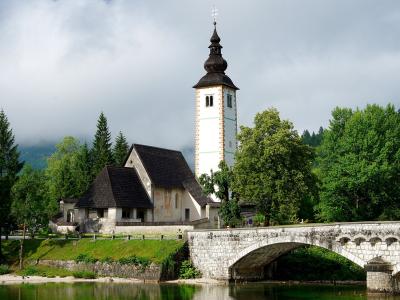
Zlatorog, the golden-horned chamois, is the best-known legendary creature of the Julian Alps, and the legend is closely tied to Bohinj and the Triglav mountains. A statue of the animal stands at Ribčev Laz, the small village at the eastern end of Lake Bohinj, near the stone bridge and the church of St. John the Baptist. It is a favourite photo stop for visitors arriving at the lake and a quick way into the folklore that gives the landscape much of its character. Zlatorog is also a national symbol of sorts, appearing on beer labels, hotel signs and boat names across the region.
The story is told in several versions, but the core is the same. Zlatorog, a white chamois with horns of gold, was the guardian of a hidden treasure in the high mountains below Triglav, in a garden where white fairies tended the flowers and the animals. In the best-known telling, a greedy hunter from the valley, tempted by the treasure and the beauty of the beast, shot Zlatorog. From the blood that fell on the rock grew red flowers, the Triglav roses, and the chamois ate them and was restored to life. Enraged, Zlatorog gored the hunter and then destroyed the garden, throwing down the rocks of the high plateau, which is why the mountain is now bare, and he vanished for ever. The tale is a lesson about greed and respect for nature, and it has been retold in poems, plays and opera.
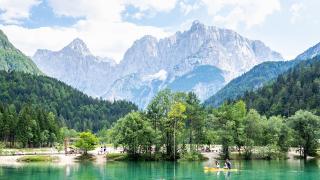
The legend was spread widely in the nineteenth century through a poem by the German writer Rudolf Baumbach, and Slovene writers took it up soon after, making Zlatorog part of Slovenian cultural identity. The Triglav rose, a flower of the legend, is also used as a name and a logo, including on one of the passenger boats on the lake. A similar statue of Zlatorog stands at Lake Jasna near Kranjska Gora, but this one at Ribčev Laz is the one most closely tied to the Bohinj version of the story.
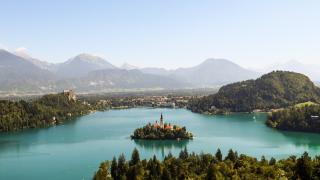
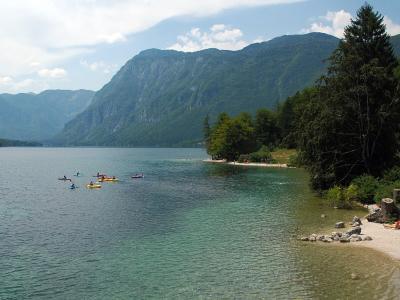
Ribčev Laz is the main landing point for visitors, and from the statue it is a short step to the lake shore, the boat landing, cafes and the beach. The church of St. John the Baptist, with medieval frescoes, stands beside the old bridge. Boats cross the lake to Ukanc, from where trails lead to the Savica waterfall, and the Vogel cable car lifts walkers to the high mountains. A walk along the shore gives views of Triglav on clear days.
The statue suits families, photographers and anyone interested in folklore, and it takes only a few minutes to visit, but the story makes the landscape richer for the rest of the day.
Categories
More photos coming soon
Nearby Attractions
Other places to visit in Ribčev Laz
Questions people ask
Quick Facts
Best Time to Visit
May to September offers mild weather, vibrant scenery, and ideal conditions for hiking, lake activities, and exploring Triglav National Park.
Book your stay