- Where
- Bovec, Bled & Bohinj
- Directions
- Directions
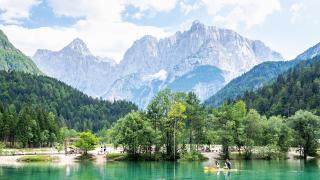
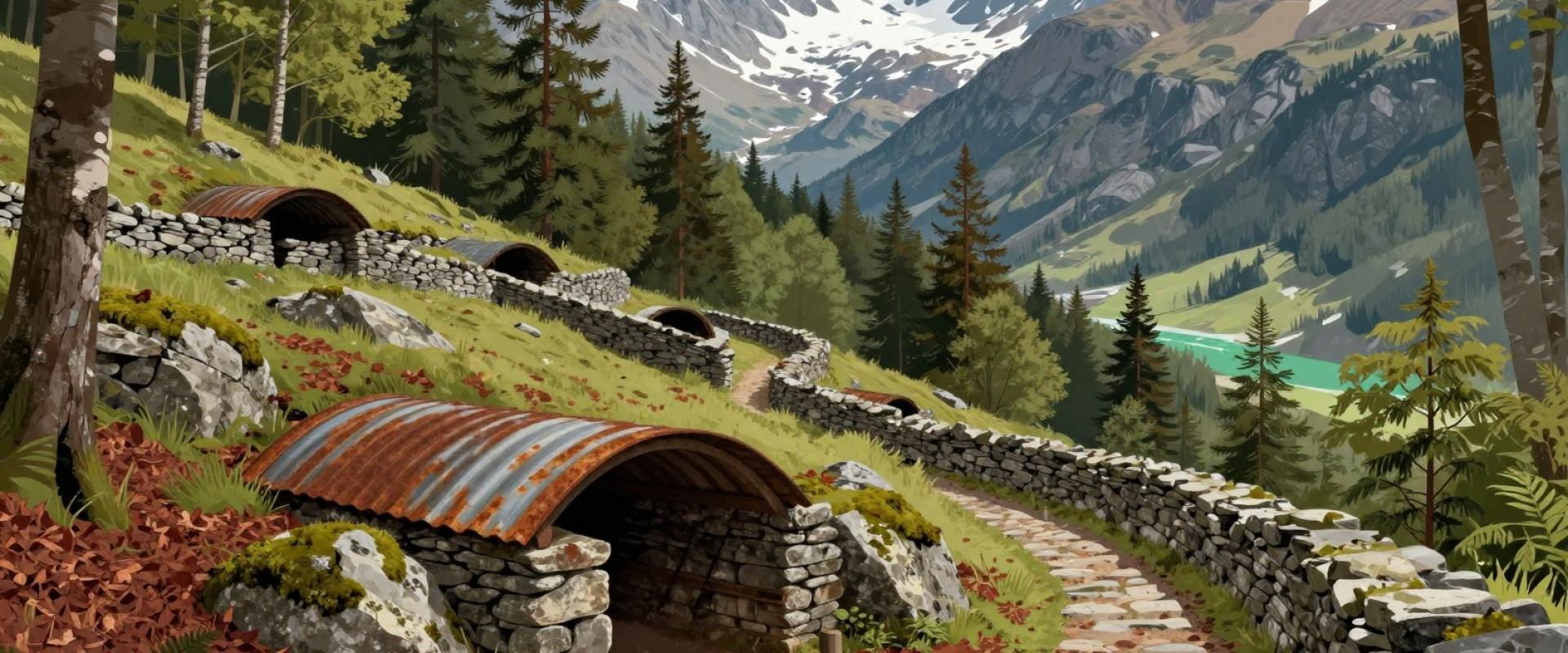
The Bovec basin and the valleys around it lay at the centre of the Isonzo Front, where Austria-Hungary and Italy fought a long and costly war in the mountains between 1915 and 1917. The front ran along the Soča and over the crests of Rombon, Krn, Kolovrat and Kanin, and in the twelve battles of the Isonzo, hundreds of thousands of soldiers died. The conflict left traces everywhere, and today the area is a vast open-air museum of the First World War, with fortresses, trenches, tunnels, mule tracks and cemeteries, set in some of the most beautiful mountain scenery in Europe.
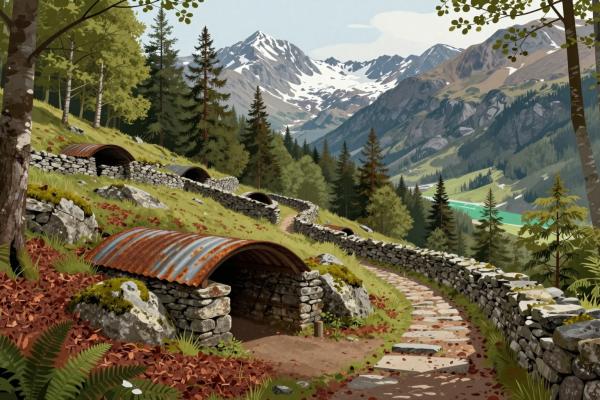
The best-known fortification near Bovec is the Kluže Fortress, a stone fort built by the Austrians at a narrow point of the valley to block the road from Italy, and Fort Herman, higher up the slope, formed part of the same defensive system. Its walls and gun positions can be visited. Higher in the hills, the open-air museums at Ravelnik, near Bovec, and at Kolovrat, above Kobarid, preserve lengths of trench, shelters, observation posts and gun emplacements, linked by marked trails with information boards. Walking among them gives a sense of the cramped, cold and exposed conditions in which soldiers lived and fought, and the contrast with the quiet meadows today is striking.
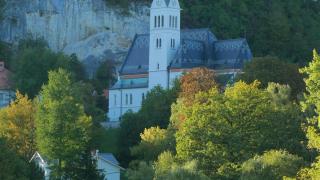
Cemeteries and memorials make the human cost clear. Military cemeteries in Bovec and in Log pod Mangartom hold the graves of Austro-Hungarian soldiers of many nationalities, and charnel houses for German and Italian dead recall those who fell on the other side. Further afield, the Church of the Holy Spirit in Javorca, in the Tolminka valley, was built by Austro-Hungarian soldiers as a memorial to their fallen comrades and is renowned for its unusual architecture and its simple, moving interior. The Walk of Peace, a long-distance trail that links sites of the front from the Julian Alps to the Adriatic, connects many of these places.
Visiting these sites is best done with some planning. Many are in the mountains and need good shoes, water and attention to the weather, and some trails are steep or exposed. The Kobarid Museum provides a good introduction before venturing out. Bovec itself offers a base with accommodation and also many activities, including those listed at Boka Waterfall, Great Soča Gorge, Slap Virje, Sušec, Canyon Učja, Kayaking on Soča River, White-water Rafting on Soča River and Canyoning With Blažka. Many visitors combine a day of history with a day on the river.
Categories
More photos coming soon
Nearby Attractions
Other places to visit in Bovec
Boka Waterfall
Slovenia’s tallest, most powerful waterfall
Natural Wonders · Hiking Trails
White-water Rafting on Soča River
Emerald Soča River rafting through Julian Alps
Activities & Adventure · Lakes & Rivers
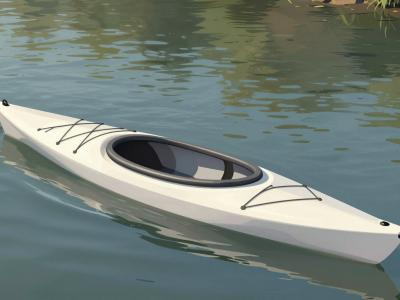
Kayaking on Soča River
Whitewater kayaking on Slovenia’s turquoise Soča River
Guided Tours · Lakes & Rivers
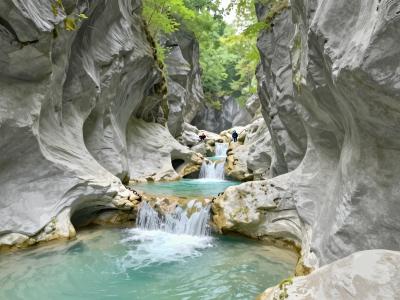
Canyoning With Blažka
Thrilling canyoning in Bovec’s wild gorges
Activities & Adventure · Coastal & Maritime
Questions people ask
Quick Facts
Best Time to Visit
May to September offers mild to warm weather for rafting, hiking, and outdoor activities; spring and autumn are scenic and less crowded, winter is ideal for snow sports.
Book your stay