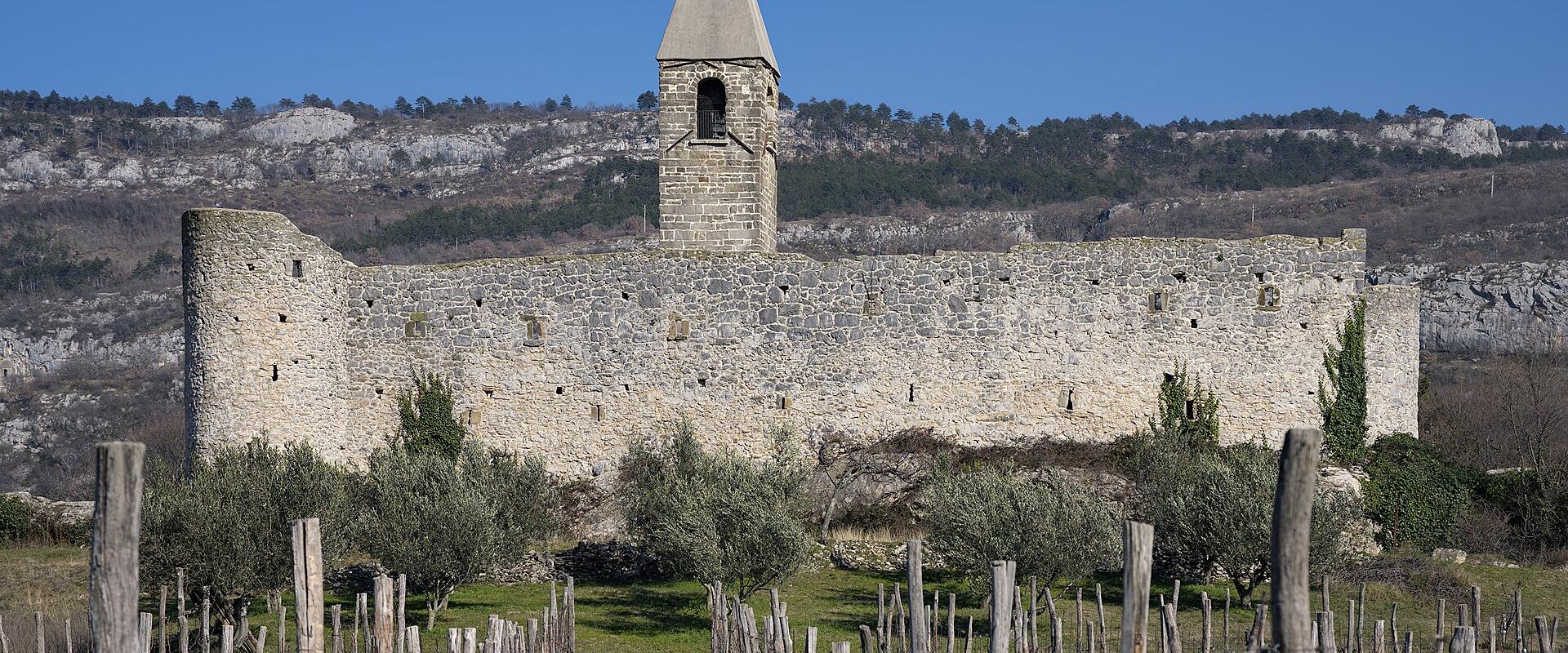
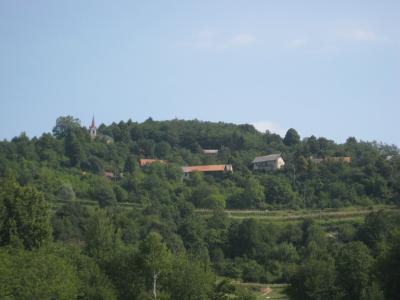
Hrastovlje stands on the edge of the Slovenian Karst, where the high limestone plateau drops steeply toward the green hills and valleys of Istria. The cliffs of the Karst Edge form the skyline to the north and east, and a handful of villages sit below them among terraces, olive trees and patches of woodland. Hrastovlje is one of these, and with fewer than 150 inhabitants it keeps the feeling of a farming hamlet. Houses of pale stone with tile roofs cluster near the church, and narrow lanes lead out into fields and then to footpaths.
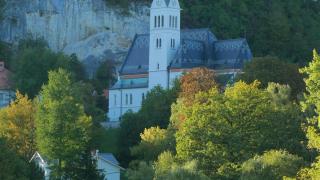
The church of the Holy Trinity is the reason most visitors come. It stands at the centre of a walled enclosure, called a tabor. In the sixteenth century, when Ottoman raiders crossed the region, villagers built tall stone walls around the churchyard, with an entrance gate, so that people and valuables could be sheltered inside. Walls of this type are found in Slovenia and elsewhere in central Europe, but the Hrastovlje example is among the best preserved in Istria. Walking through the gate, you enter a quiet courtyard with the small church in the middle.
The church building is modest in size. Its origins are debated: some historians suggest a Romanesque church from the twelfth century, others see it as an Istrian version of early Venetian Renaissance architecture of the fifteenth century. What is certain is the decoration. In 1490 a painter named Johannes de Castua, from the Kastav area near Rijeka, covered the interior with frescoes. They were forgotten and plastered over until restorers uncovered them in 1949, and they have since become one of the best-known groups of late medieval wall paintings in Slovenia.
Scenes on the walls and ceiling tell stories from the Bible and the lives of saints, and a calendar cycle on the ceiling shows the months of the year with scenes of rural work. The famous composition is the Dance of Death: skeletons lead figures from every walk of life in a procession toward the grave. The dancers range from priests and nobles to children and paupers, and the message is that all are equal in death. The images have a direct, sometimes humorous style. Visiting is worth the effort even for those not usually drawn to churches, because the colours and the narrative quality are striking in such a small space. Light inside is low, so take time to let your eyes adjust. Opening times and tickets are organised locally and can change, so ask at a tourist office in Koper or check information before driving out.
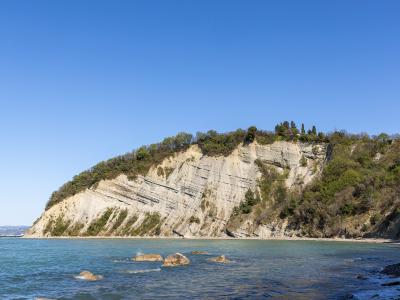
The countryside around Hrastovlje rewards a walk. Marked paths climb from the village toward the Karst Edge, where limestone cliffs, dry grassland and views over the Istrian hills and toward the Adriatic open up. This is also an area for cycling on quiet roads. The Slovenian part of Istria has a Mediterranean climate on the coast and a milder, more continental one inland, so the hills can be hot in July and August and cool in the evenings in early spring. Wildflowers appear in April and May, and the autumn is often clear and dry.
Local food and drink come from the same landscape. Olive oil is produced in small groves, and Istrian wines include the white Malvazija and the dark red Refošk. Farms and inns in the surrounding villages serve dishes based on pasta, game, prosciutto and local cheese. Plan meals ahead, since the village itself has few places to eat and nearby inns may be closed on certain days.
The best time to visit is spring or early autumn, when temperatures are comfortable and the roads are quiet. July and August are hot, although the church interior stays cool. In winter the area is calm and the bora wind can be strong on the exposed edge of the plateau.
Hrastovlje lies about twenty kilometres from the port city of Koper, which has the closest railway station and bus links, and a few kilometres from the viaduct of Črni Kal on the motorway. Local buses are infrequent, so most visitors arrive by car or bicycle. It combines well with a day in Koper, a visit to the coastal towns of Izola and Piran, or a drive through the other villages of the Istrian interior. The visit itself can be short, an hour is enough for the church, but a half day lets you add a walk and a meal.
Best time to visit
April to June and September to October, when walking in the hills is comfortable and the village is quiet.
What to see in Hrastovlje
Our picks first.
Hrastovlje by interest
The same sights, grouped by what you came for.
Planning a visit to Hrastovlje
Good to know
- Currency
- EUR
- Language
- Slovene
Quick Facts
Book your stay

Questions people ask
More places in Piran & Istrian Coast
Piran & Istrian Coast
Piran
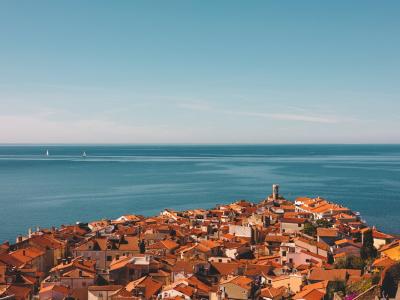
Venetian coastal town with medieval walls and seafood
Piran & Istrian Coast
Koper
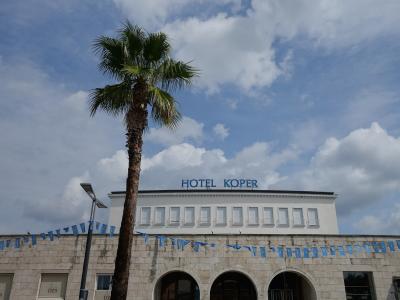
Venetian old town, Adriatic port, and seaside promenades
Piran & Istrian Coast
Portorož
Seaside resort with beaches, spas, and vibrant nightlife
Piran & Istrian Coast
Slovenian Istria
Mediterranean coastline, historic towns, and vineyards