
- Where
- Sečovlje, Piran & Istrian Coast
- Directions
- Directions
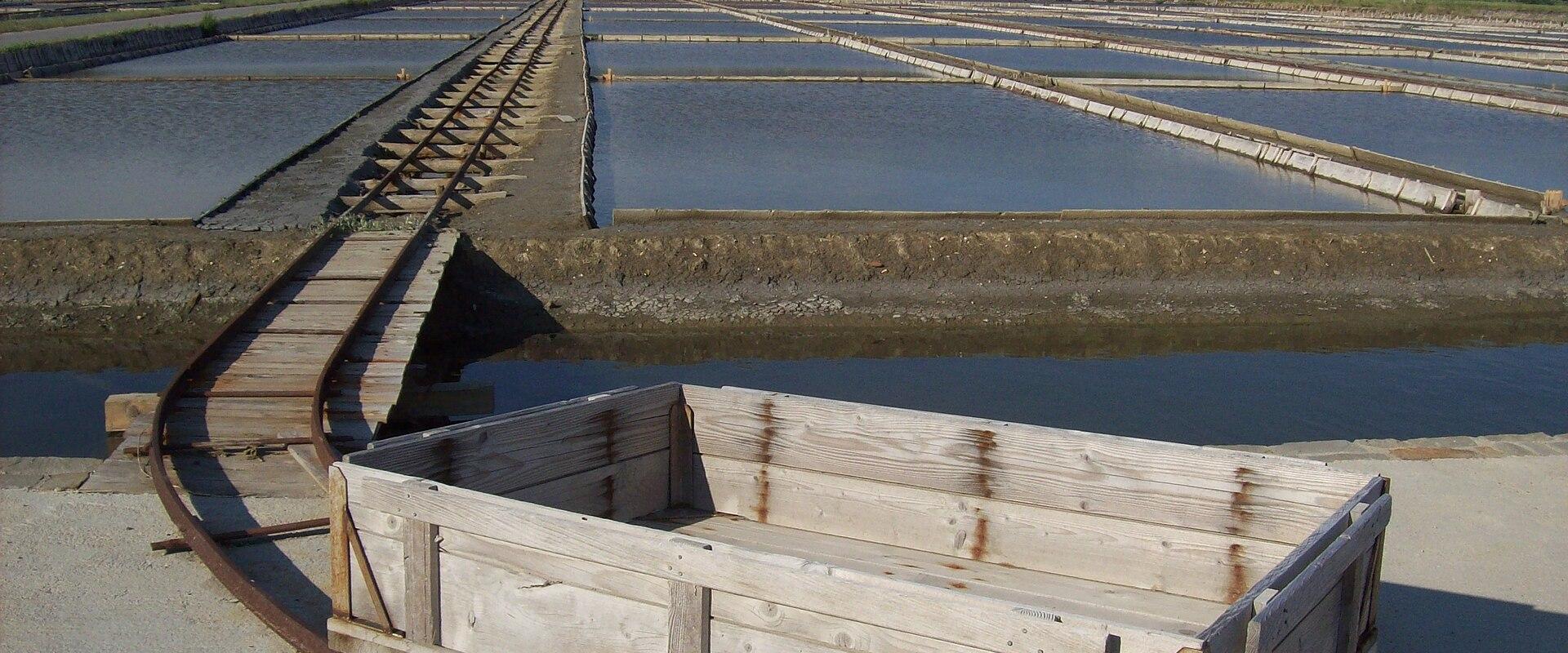
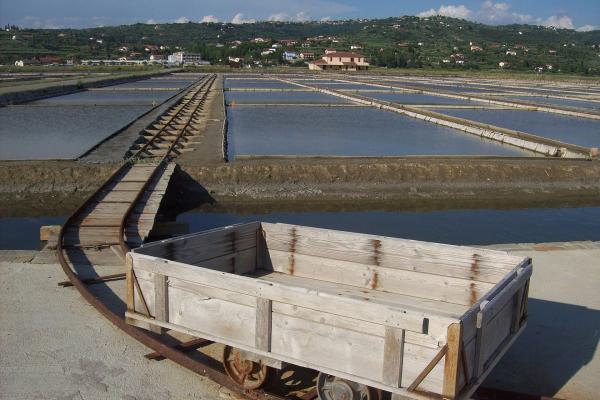
Sečovlje Salina Nature Park lies at the far southwestern corner of Slovenia, where the Dragonja river meets the Bay of Piran and the border with Croatia. It is a protected wetland of salt pans, canals, mudflats and marsh, and the only place in the country where salt is still made in the traditional way. Salt has been produced on this coast for roughly seven centuries, and the saltpans were once a major source of wealth for the towns of Piran and Koper, which shaped the area's culture and cuisine.
The salt works are divided into two main areas. At Lera, the working part, workers still harvest salt by hand in summer using wooden tools, and the salt is gathered from the bottom of shallow basins where seawater has evaporated. Part of the harvest is the fine, delicate salt crystals that form on the surface, sold as fleur de sel. The method relies on a thin layer of microscopic algae on the clay floor, which stops the salt from mixing with mud. At Fontanigge, the former working area, a cluster of stone houses was home to salt workers and their families, and one has been restored as a museum of salt-making, giving a vivid sense of a hard seasonal life.
The pans are also one of the most important bird habitats in the northern Adriatic. Wading birds, ducks, herons, flamingos on occasion, and large flocks of migrants use the lagoons, and the park is recognised internationally as a wetland of importance. Specialised plants, adapted to salty ground, grow along the dykes and on the mudflats, and the colours change through the year, from the pink tones of algae-rich water in summer to the silvery calm of winter. It is therefore a rewarding site for birdwatching and photography.
Visitors can explore on foot or by bicycle along dykes and marked paths, take guided tours that explain the production process and the ecology, and stop at the museum and information point. Mornings and late afternoons offer the best light and quietest conditions. Sun protection and water are sensible, since the open ground offers little shade, and visitors should stay on marked paths to avoid disturbing the birds.
The park suits nature lovers, photographers, families and anyone interested in traditional crafts. It pairs well with a visit to the nearby Škrline waterfalls and with the towns of Piran and Portorož along the coast. Check current opening times and tour offers before going, since the schedule follows the salt-making season.
More photos coming soon
Nearby Attractions
Other places to visit in Sečovlje
Questions people ask
Quick Facts
Best Time to Visit
May to October offers warm, sunny weather for exploring the salt pans, birdwatching, and walking; spring and autumn are mild and less crowded.
Book your stay