


Production of home linen, embroidery, and Easter eggs
Traditional Easter eggs, embroidery, and linen from Adlešiči
- Where
- Adlešiči, Bela krajina
- Directions
- Directions
Bela Krajina, the White Carniola, is a corner of southeastern Slovenia with a strong sense of its own traditions, and the village of Adlešiči on the Kolpa river is one of the places where those traditions are kept alive. Three crafts are linked in the village: weaving and making of home linen, embroidery, and the decoration of Easter eggs, each of them a skill that was once part of every household and that has been preserved by people who value it. They give a view of how families in this part of the country furnished their homes, dressed themselves and celebrated their festivals before industrially made goods took over.
Linen was traditionally grown and made at home. Flax and hemp were cultivated in the fields, spun and woven by the women of the household, and bleached in the sun to give the pale, natural cloth that gave the region its name, the White Carniola, according to one of the explanations of the name. The cloth was made into tablecloths, bed linen, towels and clothing, and it was often decorated with embroidery, usually in white or in a few strong colours, using geometric and plant motifs that were handed down from mother to daughter. Embroidered pieces were part of a bride's dowry, and the quality of her work was a source of pride. Today, local artisans continue to make tablecloths, runners and decorative items using traditional techniques, and they are sold as souvenirs.
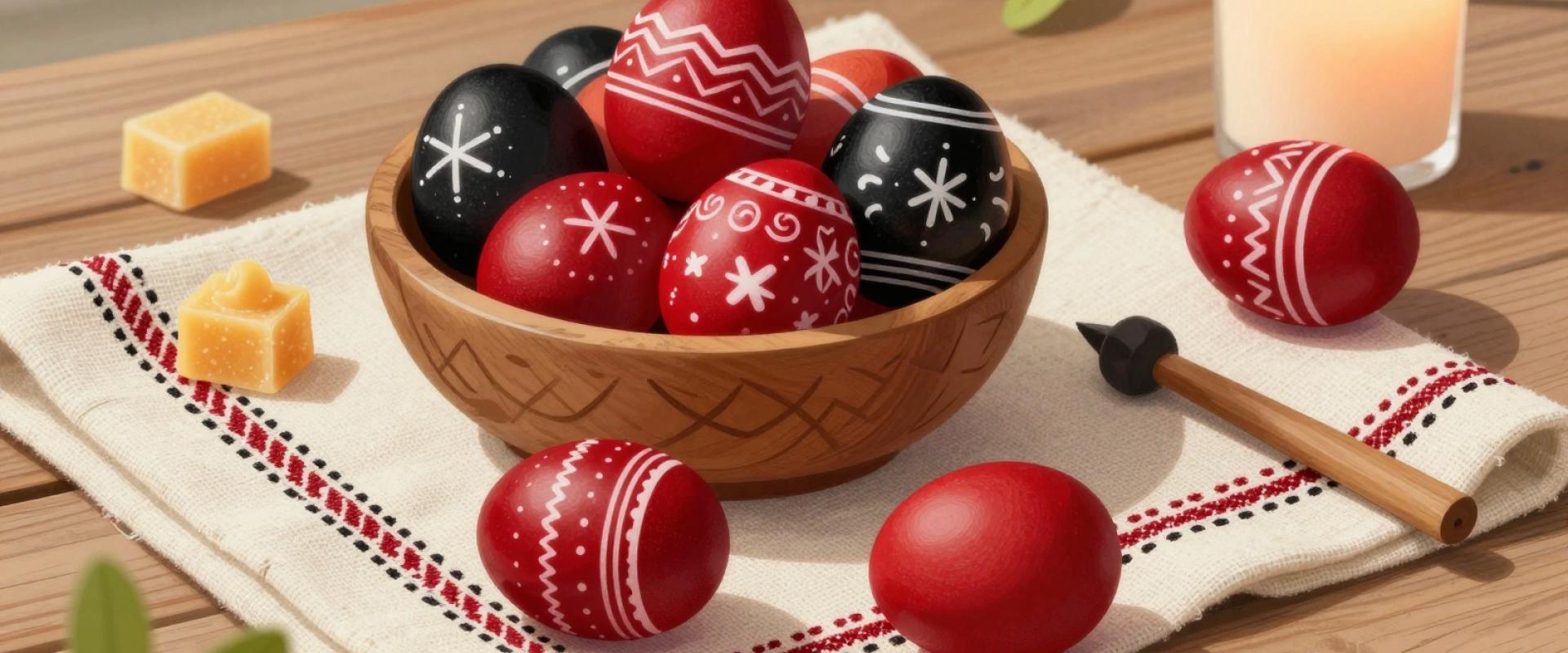
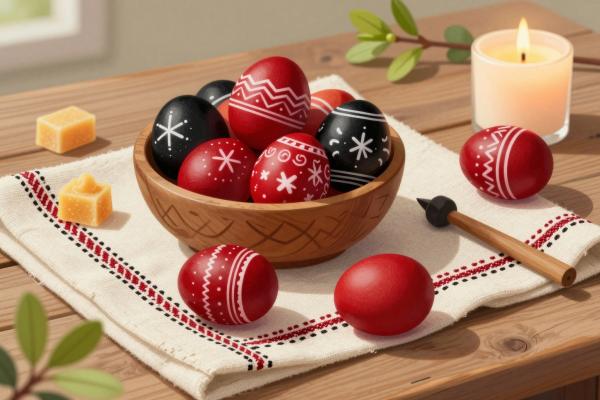
The best-known craft is the decoration of Easter eggs, called pirhi or pisanice in Bela Krajina. The Bela Krajina tradition is distinctive for its dark, almost black eggs with fine white patterns. The technique is a wax-resist method. A craftsperson draws a design on the raw or boiled egg with melted wax, applied with a special pen, then dips the egg in a dark dye. The wax protects the lines from the dye, and when it is removed, the pattern shows as a pale line on the dark surface. Finished eggs are often polished with a little fat to give a gleam. Motifs include sun symbols, crosses, flowers and stylised animals, and each has a meaning of luck, fertility or protection. Decorated eggs are exchanged at Easter and kept as treasured objects.
Visitors can see the crafts in action, especially in the weeks before Easter, when workshops and demonstrations are held in the village, and pieces can be bought directly from the makers. There are no formal opening hours, so ask locally. Adlešiči also has Canoeing and Rafting at Jankovič (Stari pod), Kanuing Kupa, Jankovič (Stari pod) Camping, Wooden glamping houses, Natural swimming pool at Tržkov slap, Pivovarne Vizir, Galerija Kambič, the Cultural-Artistic Community 'Božo Račič' and the Spomenik na Gricku.
It suits craft lovers, families and collectors of folk art. Perhaps the nicest souvenir of a Slovenian summer is a hand-decorated egg.
More photos coming soon
Nearby Attractions
Other places to visit in Adlešiči

Natural swimming pool at Tržkov slap
Natural swimming pool by Tržkov slap waterfall
Lakes & Rivers · Water Sports
Canoeing and Rafting at Jankovič (Stari pod)
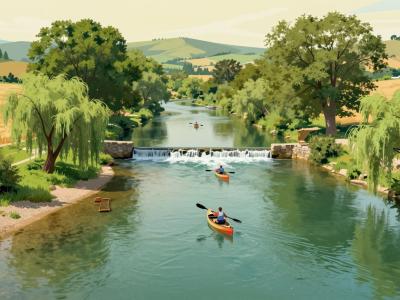
Canoeing and rafting on the Kolpa River in Adlešiči
Lakes & Rivers · Water Sports

Pivovarne Vizir
Craft brewery in Slovenia’s Bela Krajina region
Cultural Experiences · Food & Gastronomy
Cultural-Artistic Community 'Božo Račič'
Cultural-artistic hub preserving White Carniola heritage
Cultural Experiences · History & Heritage
Questions people ask
Quick Facts
Best Time to Visit
May to September offers warm weather for river activities, hiking, and festivals; spring and autumn are especially scenic and culturally vibrant.
Book your stay