
Natural bridges (two, one over 40 meters high)
Natural bridges spanning Rak Škocjan’s karst ravine
- Where
- Rak Škocjan, Notranjska
- Directions
- Directions
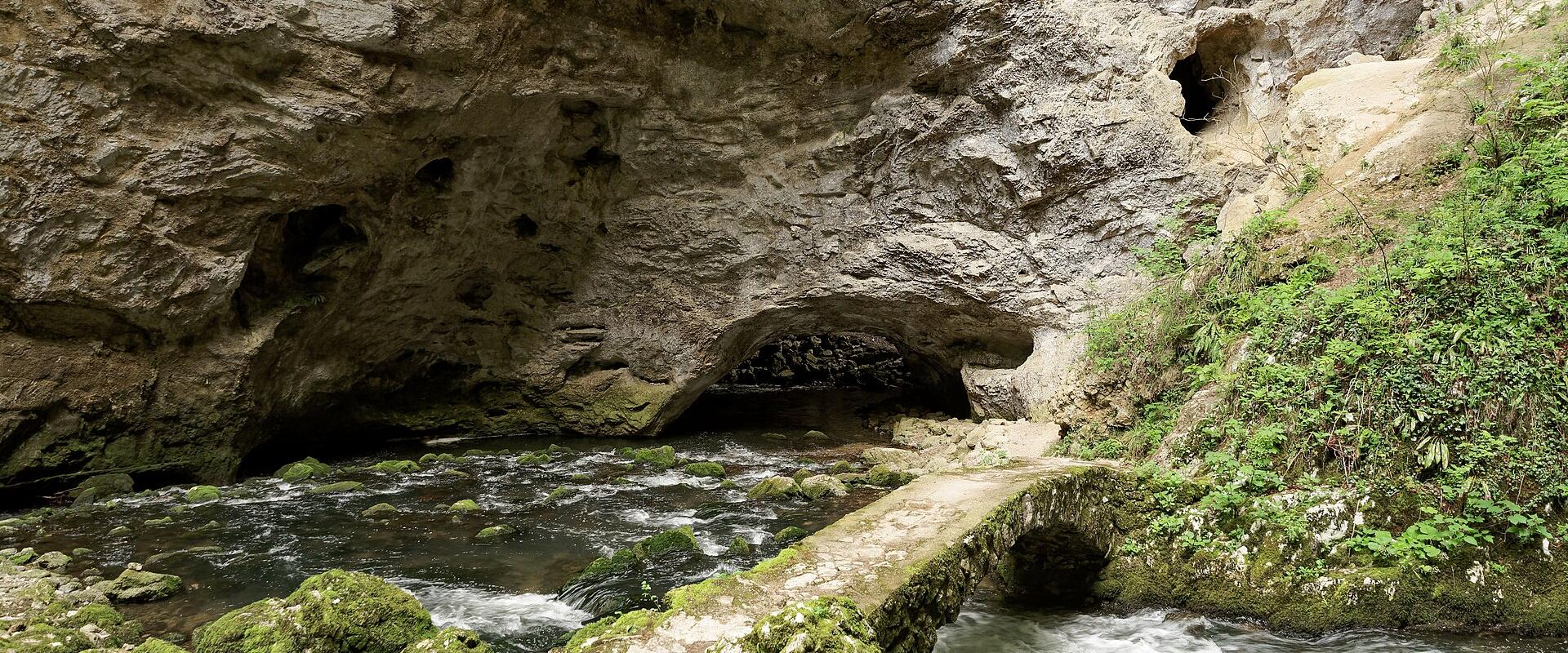
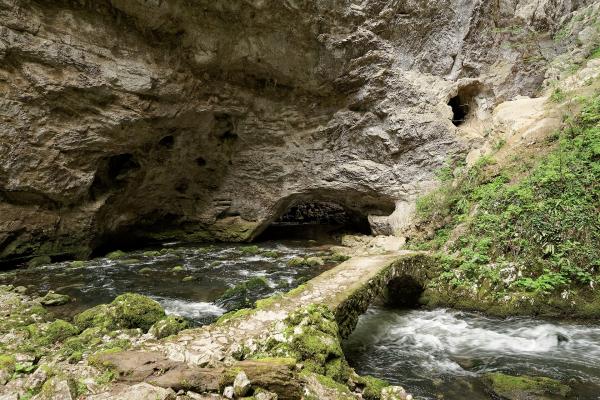
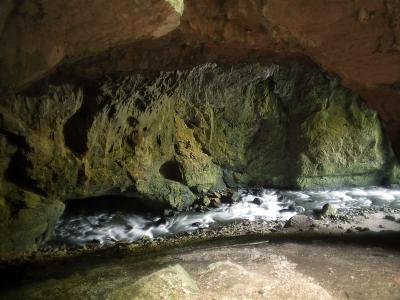
Few landscapes in Slovenia show the power of water in limestone as clearly as the two natural bridges of Rakov Škocjan. They stand in a forested valley south of Cerknica, in the foothills of the Javorniki, and they are the surviving pieces of a vanished cave. The Rak stream once flowed through an underground gallery here. Over time, the ceiling of the gallery weakened and collapsed, leaving the valley as an open, steep-sided hollow, and the two arches of rock that remain are all that is left of the original roof, a span of stone that has resisted collapse so far.
The larger arch, Veliki naravni most, the Big Natural Bridge, is the more impressive. It is tall enough that people standing beneath it look tiny, and the opening is wide enough that the Rak runs through it with room to spare. Moss and ferns grow on the damp stone, trees cling to the cliffs above, and in the morning or late afternoon, when sunlight filters down into the valley, the colours of the rock and the foliage can be extraordinary. The most popular viewpoint is a place on the north side of the valley, which gives a classic view of the bridge framed by trees and is a favourite with photographers. Nearby, the smaller arch, Mali naravni most, the Little Natural Bridge, is lower and more intimate, and the stream flows under it before running on down the valley. Walking across or beside it gives a different sense of scale.
The bridges are part of a protected landscape, the Rakov Škocjan Landscape Park, within the Notranjska Regional Park, and they are easy to see on a well-marked circuit that starts from the car park near the valley. Paths are generally good, but they can be wet and slippery in spring and autumn, so shoes with grip are important. Interpretive boards describe the geology and the story of the collapse, and the educational trail makes a gentle walk of an hour or two. Please keep to the paths, because the slopes under the arches are steep and unstable, and avoid climbing on the rock.
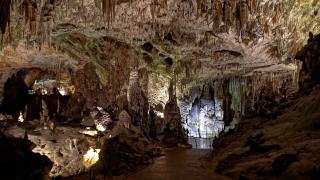
The site is open all year and has no admission fee. It can be combined with the Zelške Caves, the Karst formations and the Underground river passages elsewhere in the valley, which tell the other halves of the same story, and the caves and formations include halls more than fifty metres high that can only be visited with proper guidance.
The bridges suit hikers, photographers and families, and they are at their best after rain when the stream is full. Bring layers because the valley is cool. Visitors should look for both the Big and the Small Natural Bridge. Whether you come in spring or autumn, they show Slovenia’s karst at its most dramatic.
Categories
More photos coming soon
Nearby Attractions
Other places to visit in Rak Škocjan
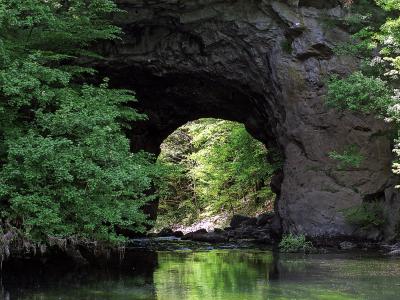
Rakov Škocjan
Karst valley with natural bridges and wetlands
Activities & Adventure · History & Heritage
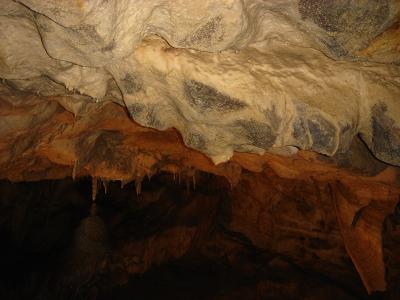
Cave halls (exceeding 50 meters in height)
Cave halls over 50m high in Rak Škocjan
Caves · Geological Sites
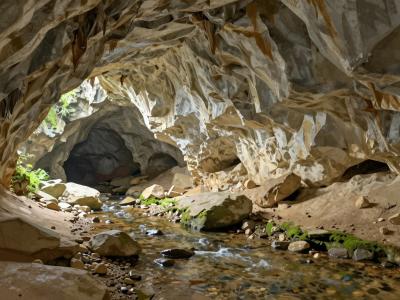
Zelške Caves
Karst caves where River Rak resurfaces
Caves · Geological Sites
Underground river passages
Underground river passages shaping Rak Škocjan valley
Activities & Adventure · History & Heritage
Questions people ask
Quick Facts
Best Time to Visit
April to October offers mild weather, lush scenery, and ideal conditions for hiking, photography, and exploring Rak Škocjan’s karst features.
Book your stay