
Whispers of the Venetian Republic
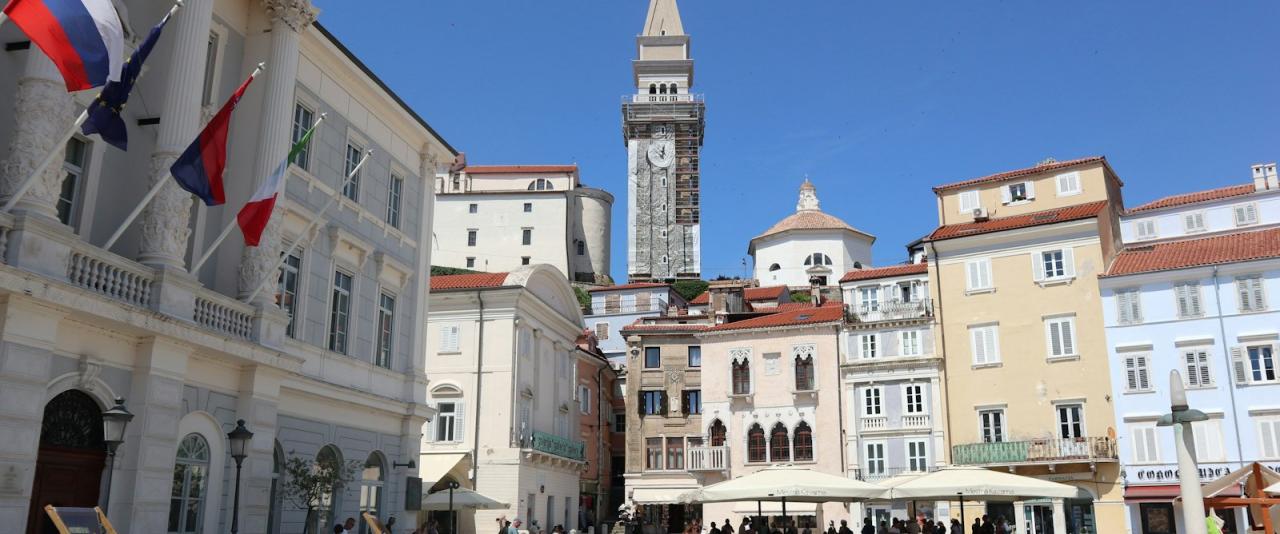
Piran clings to the Istrian coast like a sun-drenched fragment of the Serenissima’s past. For six centuries, this modest Slovenian municipality bowed to Venice, a history that now shapes its very essence. You can feel this influence the moment you arrive at Tartini Square, where Gothic and Renaissance palaces stand in pastel hues. Their weathered facades do not just sit there; they murmur tales of maritime commerce and political maneuvering.
The breeze brings a mix of pine from the nearby hills and the sharp tang of the sea. It is easy to get swept up in the rush toward the clock tower, but I advise against it. Instead, pause to examine the stone gates. Their surfaces are rough with age, bearing witness to generations of governors and fishermen. This intersection of Slavic endurance and Italianate grace creates a cultural blend found nowhere else in Europe.
Walking these medieval lanes feels less like sightseeing and more like entering a living archive. Every cobblestone has absorbed the rhythm of daily life for ages. It is not merely a town; it is a testament to long-standing cross-cultural exchange. Let the sound of the waves set your pace as you wander toward the water. There is no need to hurry. The narrow alleys will reveal their secrets at their own time.
Labyrinth of Light and Stone
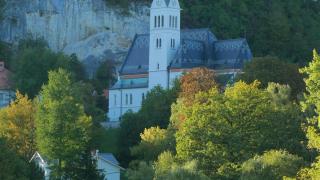
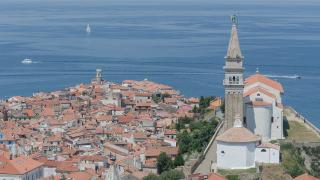
The journey begins at Tartini Square, where the Venetian Gothic spire of the Church of St. George pierces the Adriatic sky. This central hub, named for the composer born in Piran, offers a striking contrast to the intimate scale of the surrounding alleys. Step off the main thoroughfare into the shaded medieval streets, where limestone walls absorb the heat of the day. You will discover hidden chapels tucked into recesses, their faded frescoes whispering centuries of faith to those who look closely.
Small galleries and craft shops still operate here, with ceramics, sea-salt products, and local design pieces displayed behind open shutters. The air carries the scent of salt and baking bread from local konobas. Navigate carefully, as the streets narrow unpredictably, leading to secret viewpoints overlooking the port. This self-guided route costs nothing but time, allowing you to absorb the rhythm of Istrian life at your own pace.
Pause often to listen to the clatter of hooves on cobblestones, a sound that has echoed here for generations. Embrace the silence between the church bells, finding peace in the stone and light. Your exploration reveals the soul of Piran, far removed from the tourist crowds.
The Skyline’s Secret Vantage
Climb the narrow stone steps behind St. George’s Cathedral to reach the ancient ramparts. This is where history breathes loudest. The Venetian fortifications, built in the 15th century, once guarded Piran against Ottoman raids and pirate attacks. Today, they serve as your personal observatory.
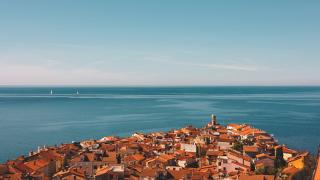
I remember standing here in late autumn, watching the sea swallow the horizon while the wind tugged at my scarf. Below, terracotta rooftops cascade toward the Adriatic, creating a mosaic of warm hues against the deep blue water. You can see the Istrian peninsula stretching into the distance, its olive groves shimmering like gold dust.
The sensory experience is unparalleled; the salt air mixes with the faint scent of pine from the nearby hills. It is not merely a view; it is a connection to the strategic importance of this coast. Take a moment to trace the line of the walls with your eyes. Notice how the stone has weathered centuries of storms. This vantage point offers a perspective few tourists discover.
It is quiet here, save for the distant cry of gulls. Allow yourself to linger. The view changes with the light, offering new shades of grey and purple as dusk approaches. This is Piran’s true soul, visible only from above.
Echoes in the Evening Air
Golden light bleeds across the limestone as the sun surrenders to the Adriatic, turning Piran’s old town into a shimmering silhouette. The frantic energy of the day dissolves into a steady, rhythmic hum within Tartini Square. I remember standing there, watching locals drift into konoba taverns, their laughter weaving through the air alongside the sharp aroma of cured pršut and chilled wine. This experience transcends mere sightseeing; it is a direct immersion into a living, breathing heritage.
Ancient Venetian Gothic facades seem to exhale in the cooling breeze, quietly revealing narratives that span generations rather than merely whispering them. The town walls stand as silent witnesses, framing the twilight with an enduring, stoic strength. To truly grasp the essence of this place, you must step away from the guidebooks and maps. Find a small table near the waterfront promenade and order a glass of crisp Rebula.
Listen closely as the waves lap against the stone foundation. In these unhurried moments, the history of Slovenia’s Istrian coast ceases to be abstract facts and becomes something tangible, deeply felt, and personal. Let the evening air draw you in, anchoring you firmly to the spirit of this coastal jewel.