

A Country of Beekeepers
Beekeeping is woven into Slovenian rural life to a degree that surprises many visitors. Painted wooden bee houses stand at the edge of villages and fields across the country, and a large number of households keep bees, often as a family tradition passed down over generations. In 2022, beekeeping in Slovenia was inscribed on UNESCO's Representative List of the Intangible Cultural Heritage of Humanity as a way of life.
For travellers, this shows up in museums, open apiaries, honey shops and the distinctive bee houses you pass on country roads.
The Carniolan Bee
The native honey bee of Slovenia is the Carniolan bee (Apis mellifera carnica), known in Slovenian as kranjska čebela. It is named after Carniola, the historical region around Ljubljana and Gorenjska. Beekeepers value it for its calm temperament and its ability to adapt to changing weather and seasons.
Slovenia protects its native bee by law: the Carniolan bee is the only honey bee race that may be kept in the country, which helps preserve its genetic purity. The breed has been exported widely and is kept by beekeepers in many other countries.
Anton Janša and World Bee Day
Anton Janša was born in Breznica, a village in the Žirovnica area of Gorenjska, and baptised on 20 May 1734. He became a painter, then turned to beekeeping and was appointed the first teacher of beekeeping at the Habsburg court in Vienna under Empress Maria Theresa. His writing on bees and his practical methods made him one of the pioneers of modern beekeeping.
At Slovenia's initiative, the United Nations General Assembly declared 20 May, the date associated with Janša's birth, as World Bee Day in December 2017. It has been marked every year since 2018, with events across Slovenia.
In Breznica, Janša's Apiary is a reconstruction of the bee house that once stood on his family's farm. It is a short detour from the motorway between Ljubljana and Kranjska Gora, and the surrounding village has a memorial to Janša.
The Museum of Apiculture in Radovljica
The best single stop for understanding Slovenian beekeeping is the Museum of Apiculture in Radovljica, a few kilometres from Bled. Founded in 1959, it occupies part of the Baroque Radovljica Manor in the old town. The museum covers the Carniolan bee, the history of beekeeping in Slovenia, notable Slovenian beekeepers and the tools and hives they used.
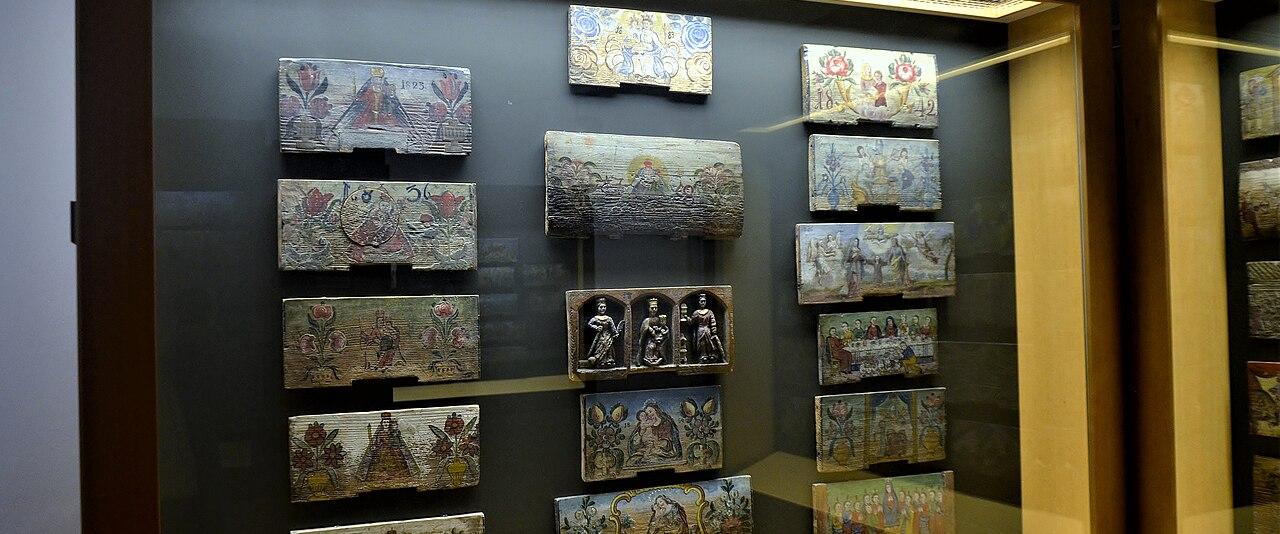
Its best-known collection is of painted beehive panels (panjske končnice). From the 18th century onwards, Slovenian beekeepers kept their bees in stacked wooden hives with a painted front board, and these boards became a form of folk art. Subjects range from religious scenes and saints to humorous scenes of village life, satire and animals behaving like people. The museum holds hundreds of these panels, and they are the main reason many visitors come.
Radovljica's old town is worth a walk in its own right, and the town's long tradition of honey-bread (lect) making is linked to beekeeping.
Visiting Beekeepers
Some beekeepers welcome visitors for tours of their apiaries, explanations of how hives are managed and honey tastings. Others offer apitherapy experiences, such as resting in a specially built bee house where you breathe the air from the hives. Local tourist information centres, particularly in Gorenjska, can point you to beekeepers who receive visitors. Book ahead, as most are small family operations.
Visit between spring and late summer if you want to see bees active around the hives. In cold months, colonies stay inside.
Slovenian Honey to Buy
Slovenia has several protected honeys. Slovenski med (Slovenian honey) carries a protected geographical indication, while Kočevski gozdni med (Kočevje forest honey) and Kraški med (Karst honey) are protected designations of origin. Common varieties include forest honey, acacia, lime blossom, chestnut and fir honey, each with a different colour and flavour.
Good places to buy honey are farmers' markets, beekeepers' own shops and tourist farms. Labels from small producers usually name the beekeeper and the area, which tells you exactly where the honey comes from.
Practical Tips
- Combining stops: Radovljica, Breznica and Bled are all close together in Gorenjska, so the museum and Janša's Apiary fit easily into one day.
- Opening times: The Radovljica museum's hours change with the season, so check before you go.
- Around bees: At open apiaries, follow the beekeeper's instructions, move calmly and avoid strong perfumes.
- Souvenirs: Small painted reproductions of beehive panels are a common Slovenian souvenir and a lighter alternative to honey jars in hand luggage.